

Most people don't think twice about custom coin envelopes until they need them. Then they realize they've been ordering the wrong size, the wrong seal type, or a generic version that doesn't carry the information their operation needs on the outside. These small envelopes do serious work across banking, retail, healthcare, and collection environments. Getting the specification right the first time saves you the friction of returns, mismatched stock, and adhesive that fails mid-shift. This guide covers everything worth knowing so you order with confidence and don't revisit the decision six months later.
They're Called Coin Envelopes - But That's Only Half the Story
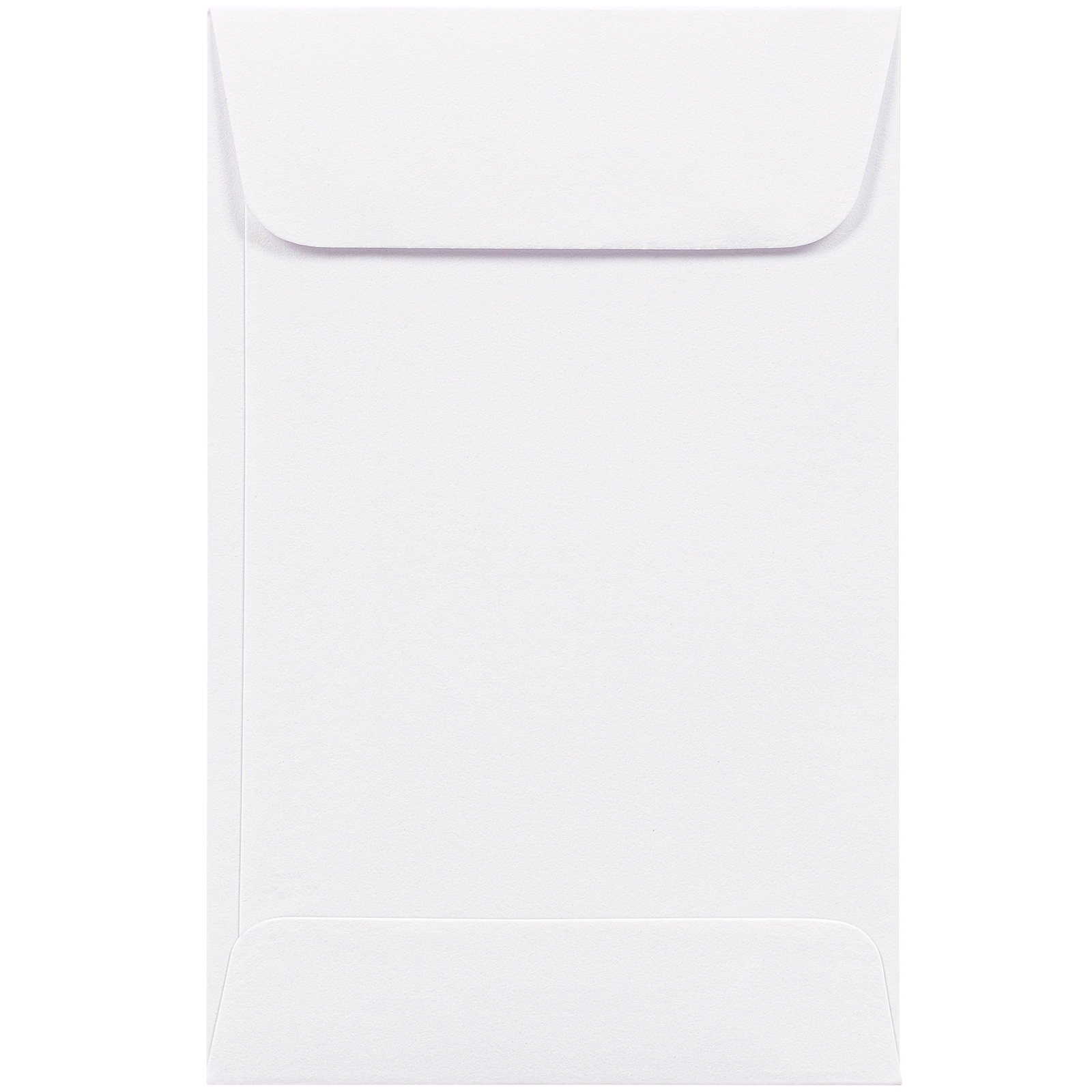
The name is accurate but limiting. Yes, banks and cash handlers have used coin envelopes for decades to sort, count, and label denominations at teller stations. Walk into any branch and you'll find them stacked near the cash drawers, each one carrying a denomination, a count, and an identifying mark. That's the original use and it still accounts for a significant portion of coin envelope demand today.
But the format caught on across entirely different industries for the same core reason: small contents need secure containment and clear identification, and a compact paper envelope with a short-side opening and a writable surface delivers exactly that.
Dental offices use them to organize patient-specific small components such as rubber bands, implant screws, and retainer parts through multi-stage treatment workflows where mixing items up creates real clinical problems. The envelope keeps contents separated and labeled through every step without requiring a separate labeling system.
Hardware operations and manufacturing facilities use them to sort and store small fasteners, pins, washers, and screws by job, by part number, or by station. A drawer full of properly labeled coin envelopes speeds up job setup and reduces the picking errors that come from pulling parts out of shared bins.
Seed companies, botanical gardens, and home gardeners use them to package and label seed varieties for storage, exchange, and sale. The compact size, writable surface, and reliable seal are exactly what that application needs.
Stamp and coin collectors use them as archival micro-storage units, with each specimen in its own envelope, labeled, filed, and retrievable without handling the item directly. For serious collectors building catalogued archives, coin envelopes are as much a cataloguing tool as a protective one.
What all of these applications share is the same core requirement: small contents, secure containment, clear identification. The coin envelope handles all three simultaneously in a format that costs very little and takes up almost no space.
Coin Envelope Sizes at a Glance
All three sizes in the Business Envelopes catalog follow the same short-side opening design. The opening runs along the shorter edge, which keeps contents secure during handling and makes the envelope compact enough for drawer storage at any volume. The table below maps each size to its physical dimensions, available materials, and primary use cases.
| Size | Dimensions | Materials | Seal Options | Best For |
|---|---|---|---|---|
| #1 Coin | 2-1/4 x 3-1/2 in | White wove, brown kraft | Gum flap | Single coins, small jewelry, seeds, tiny dental parts, specimen samples |
| #7 Coin | 3-1/2 x 6-1/2 in | White wove, brown kraft | Gum flap, peel-and-seal | Multiple coins, grouped hardware, cash handling, medium seed packets, collector items |
| 4-5/8 x 6-3/4 | 4-5/8 x 6-3/4 in | White wove, brown kraft | Peel-and-seal | Larger hardware sets, folded ID slips, retail cash packets, bulkier contents |
Sizes: Matching the Envelope to What Goes Inside
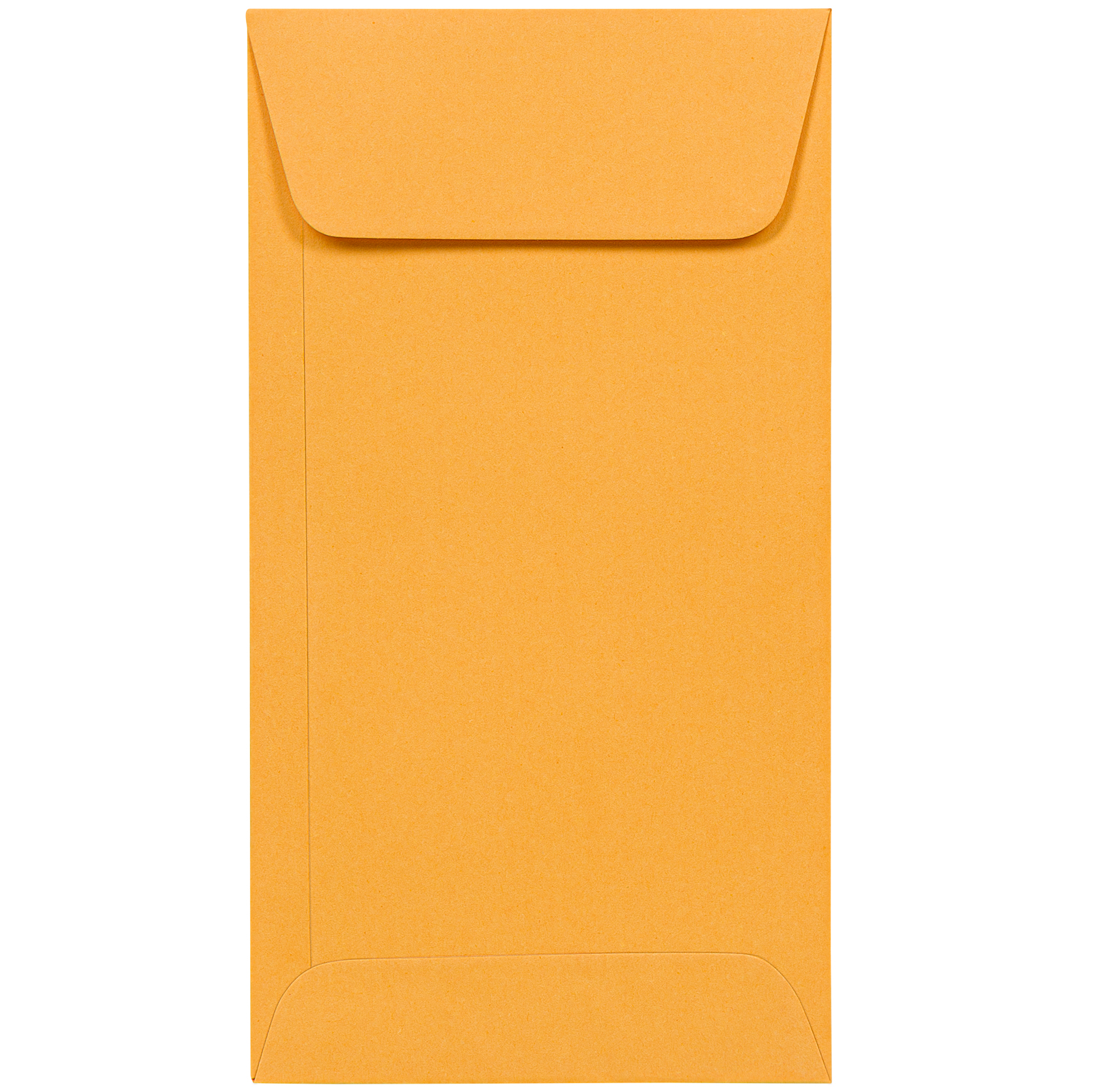
Coin envelopes come in standard size designations, and the right size is always determined by the physical dimensions of the contents, not by habit or by what's cheapest per unit.
#1 Coin Envelopes are the smallest in the standard range. Compact enough for a single coin, a tiny seed packet, a small jewelry component, or a specimen sample where minimal footprint is the priority. Available in white and brown kraft with gum flap sealing. The small surface area still accommodates handwritten or pre-printed identification such as denomination, date, patient name, and part number without feeling cramped. Browse #1 white coin envelopes and #1 brown kraft coin envelopes.
#7 Coin Envelopes are the more versatile mid-range size. Larger interior room handles multiple coins, grouped hardware parts, several small items together, or anything that needs slightly more space without stepping up to a full small envelope format. Available in white and brown kraft with both gum flap and peel-and-seal configurations, which makes them the most adaptable option across different workflow requirements. See #7 white coin envelopes, #7 brown kraft gum flap, and #7 white peel-and-seal.
4-5/8 x 6-3/4 Envelopes step up for bulkier contents such as larger hardware sets, folded identification slips, grouped specimens, or retail cash packets where the contents are physically larger than a standard coin. This size bridges coin envelopes and small business envelopes, covering use cases that fall between the two.
The sizing rule is simple. If there's too much interior room, contents shift and can be damaged. If the envelope is too tight, the flap won't seal cleanly and the structural integrity weakens with repeated handling. Order a small sample across two or three sizes if you're not certain, confirm which fits correctly, then order at volume.
Seal Types: Matching the Seal to How Your Team Works
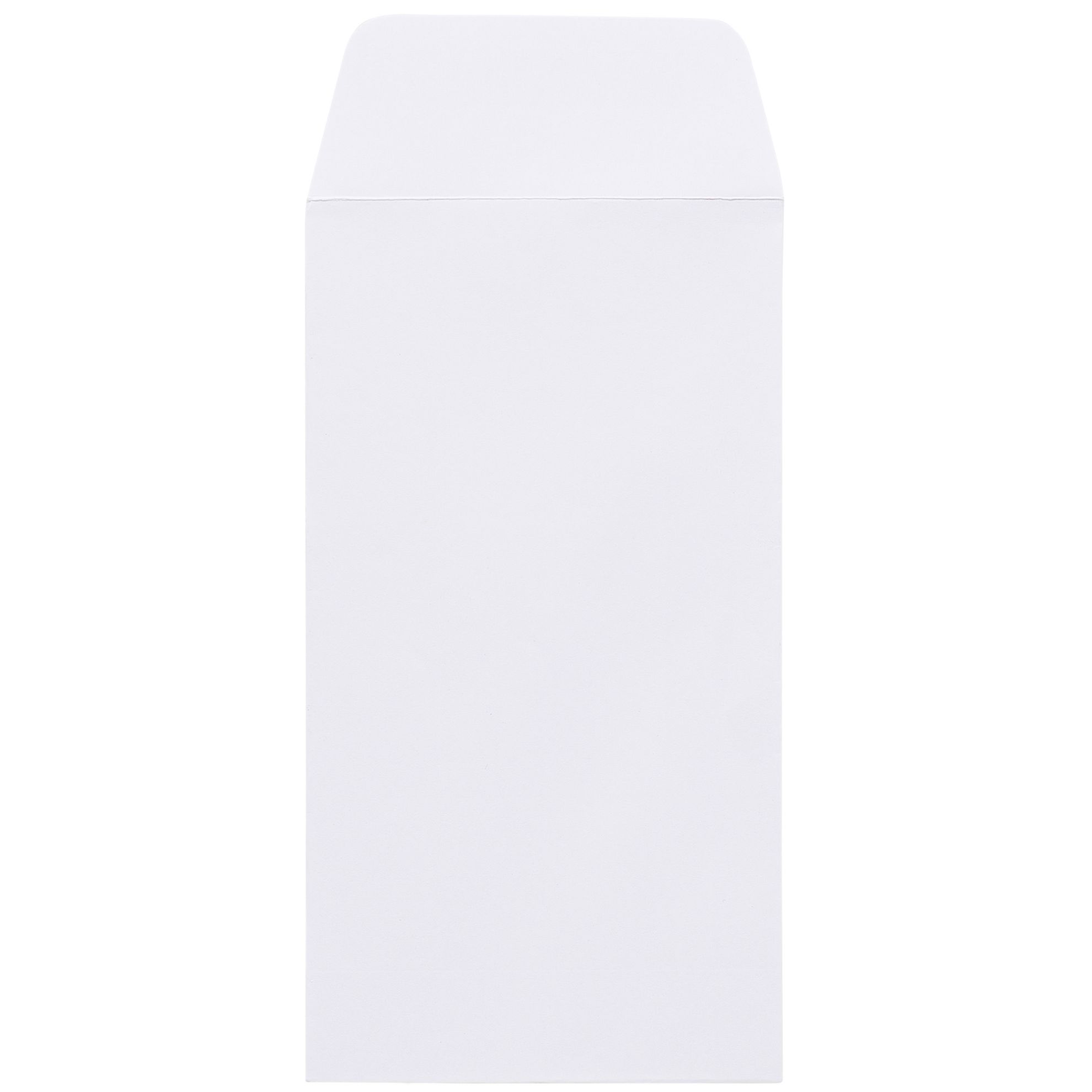
Two sealing options run across the coin envelope range, and the right choice depends on your operation's workflow, specifically whether envelopes are sealed in batches or one at a time, and whether moisture near the contents is a concern.
Gum flap (moistenable) is the traditional option. A strip of water-activated adhesive on the short-side flap gets moistened at a damp sponge station, a counter moistener, or by hand, and presses closed into a secure bond. For teller operations sealing dozens of envelopes per shift, gum flap is fast, cost-effective, and holds well through stacking and handling. Stock also stores longer without adhesive degradation, which matters when ordering in bulk with several months of supply on hand.
Peel-and-seal removes moisture from the equation entirely. A protective liner covers the pressure-sensitive adhesive strip. Peel it, press the flap closed, sealed. No water source required and no risk of moisture affecting sensitive contents. For dental offices handling patient components, collectors protecting specimens, or any environment where liquid near the contents isn't acceptable, peel-and-seal is the right choice. It also creates a tamper-evident bond: the flap tears visibly if someone attempts to open it after sealing.
Paper Weight and Material: What the Numbers Mean
Coin envelopes at Business Envelopes are available in two material choices: white wove and brown kraft. Both work for the same range of applications, but each has characteristics that suit specific environments better.
White wove is the standard for professional and clinical settings. The smooth wove finish accepts handwriting and printed labels cleanly, which makes it the preferred surface for dental practices, healthcare, and any operation where a professional presentation matters. White also improves contrast for handwritten identification fields, making the text easier to read at a glance.
Brown kraft is the traditional coin envelope material for banking, hardware, and archival storage. The unbleached kraft pulp is more robust under repeated handling, which suits teller station use, parts drawers, and seed storage where envelopes are picked up and put down many times. The natural kraft surface also takes pencil well, which is useful in teller environments where contents are updated and the denomination or count is corrected across shifts.
For paper weight specifications and how envelope basis weight affects durability and stiffness, see Envelope Paper Weight Guide: 20 lb, 24 lb and 28 lb Explained.
Colour Options: When White or Kraft Is Not Enough
Standard coin envelopes ship in white or brown kraft. For most banking, healthcare, and hardware applications, these two options cover everything the operation needs. But there are cases where colour coding adds operational value.
Retail cash operations using coin envelopes for denomination sorting sometimes use colour to speed up identification at a glance: one colour per denomination, visible without reading the label. Dental practices handling multi-patient batches use colour to prevent mix-ups between patients at different treatment stages. Seed archivists sometimes use colour to sort by season, species family, or storage condition.
For operations that need coloured envelope stock in small formats, see the coloured envelopes range. Custom printing on standard white coin envelopes can also simulate colour coding by using a pre-printed background or border in the relevant colour for each denomination or category.
What Custom Printing Actually Changes in Practice
A blank coin envelope stores and seals. A custom printed coin envelope stores, seals, and communicates before a single word is written by hand.
Pre-printing identification fields directly on the envelope face standardizes how your team records information on every envelope they handle. Whatever your operation needs to track is already positioned correctly on every envelope. A denomination field, a count box, a teller ID line, a patient name field, a part number area: all printed, all consistent, eliminating variation from different people deciding what to write and where.
For banking operations, custom printed coin envelopes with branch identification, denomination fields, and count verification boxes are operational tools that improve accuracy and speed at the station level. Errors in cash handling often trace back to inconsistent labeling, not to counting mistakes. Standardized printed fields eliminate the labeling variable.
For dental and medical offices, pre-printed patient identification and component labeling fields ensure the right items reach the right patient at every stage of treatment.
For archivists and collectors, consistent labeling across every envelope creates a cataloguing system that scales as the collection grows.
The investment in custom printing pays back quickly in reduced errors, faster processing, and a professional presentation that reflects the standard of the operation producing them. For the full guide to custom printing options, layouts, and design considerations, see Custom Printed Envelopes: Logo, Return Address and Design Guide.
Ordering Tips for High-Volume Programs
Banks, healthcare networks, and manufacturing operations ordering coin envelopes at volume benefit from a few ordering decisions made before the first large order is placed.
- Order a sample quantity first. If you are switching from a previous supplier or ordering a new size for the first time, order a small quantity, confirm the fit and seal performance with your actual contents, and then place the volume order. Getting this wrong at 10,000 units is significantly more disruptive than catching it at 100.
- Confirm the seal type for your storage conditions. Gum flap stock stores well in dry, climate-controlled environments. In high-humidity facilities such as some healthcare storage rooms, gum flap adhesive can activate prematurely on the shelf. Peel-and-seal is more stable in variable humidity conditions.
- Plan custom printing lead time. Custom printed coin envelopes require a proof review and approval cycle before production. For dental offices and banks ordering for a new program, building in 7 to 10 business days before the delivery date needed is the standard planning window.
- No minimum order applies. Whether you are ordering 100 envelopes for a small practice or 50,000 for a multi-branch banking operation, the same no-minimum rule applies. Volume ordering does not require a different process.
For wholesale and volume pricing guidance, see Wholesale Envelopes: Complete Business Buying Guide.
Why BusinessEnvelopes.com Gets This Right

Sourcing coin envelopes from a general office supply retailer works until something specific goes wrong. The friction points are predictable: a size slightly off for your contents, a seal that fails in your facility's storage conditions, or a custom printing need the retailer can't fulfill without a large minimum order.
BusinessEnvelopes.com has supplied US businesses, banks, healthcare facilities, and professional operations with envelope inventory since 1997. The coin envelope range covers all three standard sizes: #1, #7, and 4-5/8 x 6-3/4, in white and brown kraft, with both gum flap and peel-and-seal options available across the range where the use case warrants it.
No minimum order applies at any volume. A dental practice ordering 500 envelopes and a bank branch ordering 10,000 both place the same kind of order and both get exactly what they need. Free ground shipping applies across all quantities. Custom printing is available for operations that need pre-printed labeling fields, branding, or identification markers on every envelope, and that custom printing capability comes with the same no-minimum flexibility as the blank stock catalog.
Nearly three decades of envelope specialization means the questions that come up around sizing, seal compatibility, and custom printing requirements get useful answers based on real operational experience, not generic catalog guidance. Browse the complete range at coin envelopes.
What Customers Say
★★★★ Jacob, Verified Buyer | #7 White Coin Envelopes, Custom Printed
"These envelopes work great for payments of any kind. Its thick enough to hold coins."
★★★★★ Michael N., Verified Buyer | #7 White Coin Envelopes, Custom Printed
"I uploaded a file that I wanted to be printed on the full envelope. I received a PDF proof to review within 2 hours of placing the order. I was very satisfied with the ordering process and final results."
★★★★ Jacob, Verified Buyer | #7 White Coin Envelopes, Custom Printed
"Used for business."
Conclusion
Custom coin envelopes earn their place in every operation that handles small valuables with any regularity. Banks, dental practices, retailers, hardware teams, archivists, seed companies, and collectors all rely on them, and for good reason. The format protects small contents, keeps them identified through every handling stage, and operates at a cost that makes it practical at any volume.
Getting the specification right means matching size to contents, seal type to your team's workflow, and custom printing fields to the information your operation actually needs to track. Everything you need is available at BusinessEnvelopes.com: full size range in stock, no minimum order, free ground shipping on every order.