 Free shipping

Do Envelopes Need to Be Sealed to Mail? The Complete USPS Answer by Envelope Type
It is a question that comes up in offices, mailrooms, and printing departments every day: do envelopes need to be sealed to mail? The short answer is that it depends on your mail class and your envelope type. Sealing is required in some situations, optional in others, and genuinely irrelevant for a few formats entirely.
What creates most of the confusion is that the USPS does not have one universal sealing rule that covers all mail. Instead, sealing requirements are tied to mail class, with First-Class Mail and Marketing Mail operating under very different standards. Envelope type also matters, because a standard gummed-flap #10 envelope, a peel-and-seal booklet mailer, and a clasp catalog envelope each behave differently when run through postal processing equipment.
This guide covers the actual USPS rules, breaks them down by envelope closure type, and answers the practical questions that come up when you are preparing a real mailing.
Quick Answer: First-Class Mail must be sealed against postal inspection under USPS DMM 233.3.2.1. USPS Marketing Mail does not have to be sealed, and mailing it unsealed gives USPS permission to inspect the contents. Postcards require no envelope at all. For all other formats, the type of closure, from gummed flap to peel-and-seal to clasp, determines whether a separate seal is needed and how well it holds up in machine processing.
What USPS Regulations Actually Say About Sealing Envelopes
The USPS Domestic Mail Manual (DMM) addresses envelope sealing in two main places: DMM 233.3.2.1, which governs First-Class Mail, and 39 CFR 233.3, which establishes the legal rights around sealed versus unsealed mail. Understanding both helps you choose the right approach for your mailing.
First-Class Mail: Sealing Is Required
DMM 233.3.2.1 states clearly that First-Class Mail is sealed against postal inspection. This is not just a procedural preference; it is a legal protection. Under 39 CFR 233.3, postal employees cannot open or inspect sealed First-Class Mail without a federal search warrant. Sealing your envelope is how that protection is established.
In practice, this means that any personal letter, business correspondence, invoice, check, or document you send First-Class must be placed in a sealed envelope before you drop it in the mail. An envelope with an open flap or a flap that was never adhered does not meet this standard.
USPS Marketing Mail: Sealing Is Not Required
USPS Marketing Mail, previously known as Standard Mail or Bulk Mail, operates differently. This mail class is not sealed against postal inspection. When you mail at Marketing Mail rates, USPS regulations hold that doing so constitutes consent for postal employees to open and inspect the contents, most commonly to verify that the postage rate paid matches the contents and that the material is mailable.
Because of this, it is fully acceptable to send USPS Marketing Mail in an unsealed or open-flap envelope. Many high-volume direct mail pieces, including folded self-mailers and open-faced catalogs, are designed without a traditional sealed envelope at all.
Physical Standards for Machinable Letters
Regardless of mail class, if your envelope is going through automation processing equipment, the physical requirements from DMM Section 201 apply. The DMM specifies that each machinable or automation letter must be a sealed envelope, or, if not enveloped, must be sealed or glued completely along all four sides. Envelopes sealed along all four sides must be made from paper with a minimum 50-pound basis weight.
The practical upshot: even if your mail class does not strictly require a seal, a sealed envelope processes more reliably through automated sorting equipment. An open flap can catch on rollers, jam machines, or cause the contents to fall out mid-sort.
Sealing Requirements by Mail Class: Quick Reference
Use this table when you are planning a mailing and need to know whether your envelope must be sealed or whether leaving it open is acceptable.
| Mail Class | Sealed Against Inspection? | Sealing Required? | Can USPS Inspect Without Warrant? |
|---|---|---|---|
| First-Class Mail (letters, bills, checks) | Yes | Yes | No (federal warrant required) |
| Priority Mail | Yes | Yes | No (federal warrant required) |
| USPS Marketing Mail (bulk, standard) | No | No | Yes (to verify postage/mailability) |
| Periodicals | No | No | Yes |
| Package Services / Media Mail | No | No | Yes |
| Postcards | N/A (no envelope) | N/A | Yes (open card) |
Do Envelopes Need to Be Sealed? Answer by Envelope Type
Mail class tells you whether a seal is legally required. Envelope type tells you how that seal is actually applied and what happens if it fails. Here is how the rules work for every major envelope closure type.
Gummed Flap Envelopes
Gummed flap envelopes are the most familiar closure type in business mailing. The inside of the flap is coated with a moisture-activated adhesive, typically a dextrin or modified starch compound. You moisten the adhesive strip, press the flap down, and the bond forms as it dries.
For First-Class Mail, the gummed flap must be moistened and sealed before the envelope enters the mail stream. A dry, unactivated gummed flap is not a seal. The adhesive needs moisture to reactivate and form the paper-tearing bond that holds the flap in place through sorting and delivery.
For USPS Marketing Mail, you can mail a gummed-flap envelope with the flap open or only partially sealed. That said, most mailers still seal gummed-flap envelopes in bulk campaigns to prevent contents from falling out during transport and machine processing.
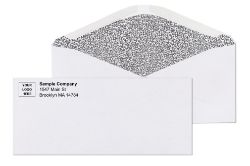
#10 Gummed Flap Business Envelopes
Standard gummed flap closure in white wove and security-tinted stock. Available blank and custom-printed. The most common format for First-Class business letters, invoices, and statements.
Shop #10 EnvelopesPeel-and-Seal (Pressure-Sensitive Adhesive) Envelopes
Peel-and-seal envelopes use a pressure-sensitive adhesive strip protected by a silicone-coated liner strip. To seal the envelope, you peel off the liner and press the flap firmly against the envelope body. The adhesive bonds on contact with no moisture required.
This closure type fully meets the USPS sealing requirement for First-Class Mail. The bond is permanent, tamper-evident, and strong enough to survive machine processing. Because there is no moisture or drying time involved, peel-and-seal envelopes are the preferred choice for volume First-Class mailings where speed and consistency matter.
One common question: what if you forget to remove the liner strip and just press the flap down? The flap will not seal, because the liner prevents the adhesive from contacting the envelope body. Always peel first, then press firmly for a full three to five seconds to activate the bond. For more on self-seal closures and how they compare, see the Peel-and-Seal vs Flip-and-Stick Self-Seal Envelope Guide.
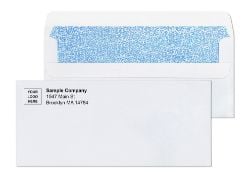
Peel-and-Seal Self-Seal Envelopes
No moisture required. The pressure-sensitive adhesive strip peels clean and forms a tamper-evident bond on contact. Available in #10, #9, and catalog formats with optional security tinting.
Shop Self Seal EnvelopesFlip-and-Stick (Latex Cohesive) Envelopes
Flip-and-stick envelopes use a latex cohesive adhesive that only bonds to itself. Two areas of the same adhesive are applied on opposite surfaces, and when you fold the flap down and press, the two adhesive areas contact and form a permanent bond without any liner to remove.
This closure is fast and requires no moisture, making it well suited to high-volume insertion operations. It meets the USPS sealing standard for First-Class Mail. Because the adhesive activates only when the matching surfaces contact each other, there is no risk of premature sealing during storage or insertion.
Clasp and Clasp-and-Gummed Envelopes
Clasp envelopes use a metal prong fastener on the back flap. To close them, you feed the prongs through a reinforced hole in the flap and bend them flat. Many clasp envelopes also have a gummed strip on the flap that can be moistened for a secondary adhesive seal.
For USPS purposes, clasp envelopes sent as flat-size pieces do not require an adhesive seal. The metal clasp alone is considered adequate to keep the flap closed. If the envelope is being sent First-Class with sensitive contents, adding the gummed seal in addition to the clasp gives you the full protection of sealed First-Class Mail. Refer to the How to Mail a Clasp Envelope guide for preparation steps and USPS flat-size requirements.

Clasp Envelopes
Metal prong closure for secure document mailing. Available in 6x9, 9x12, 10x13, and 10x15 sizes in brown kraft. Many styles include a gummed flap for an optional adhesive seal in addition to the clasp.
Shop Clasp EnvelopesOpen-End and Booklet Envelopes Without a Clasp
Open-end and booklet envelopes, such as catalog-style 9x12 or 10x13 mailers, typically come with a gummed or peel-and-seal flap along the short or long edge. Without a clasp, the only thing holding the flap closed is the adhesive.
For First-Class mailing, the adhesive must be fully activated and the flap fully adhered. For Marketing Mail at these larger sizes, an unsealed flap is technically permitted, though a properly sealed flap is strongly recommended because open flaps are likely to catch on sorting equipment or allow contents to fall out. See the Open End vs Open Side Envelope Guide for format details and the Large Envelope Sizes Guide for size and postage requirements.
Common Sealing Questions Answered for Business Mailers
What Happens If You Mail a Letter Without Sealing the Flap?
If you drop an unsealed First-Class letter into a mailbox or hand it to a postal worker, a few things can happen. In many cases the letter will be processed and delivered, especially if the contents are paper-only and the envelope happens to stay closed through sorting. But there is a meaningful risk that the flap opens during machine processing, the contents fall out, or the piece is delayed for inspection. An unsealed First-Class envelope is technically non-compliant with DMM 233.3.2.1. If you are concerned about a mailing that went out without proper sealing, the How to Stop an Envelope From Coming Unsealed guide covers the most common causes and fixes.
Can You Use Tape to Seal an Envelope?
Yes. Transparent tape is an accepted closure method for both letter-size and flat-size pieces. The USPS physical standards note that when tape is used on a folded self-mailer, the saw-toothed cut edge of the tape should be placed parallel to the edge being sealed. Tape is also commonly used as a backup seal when a gummed flap adhesive has dried out or lost tack over time, particularly with older envelope stock that was stored in improper humidity.
What About Envelopes That Come Open After Sealing?
A flap that opens after sealing is most often a gummed adhesive issue: insufficient moisture, an adhesive that has degraded in storage, or humidity during storage that caused premature blocking and then bond failure. With peel-and-seal envelopes, a flap that re-opens after sealing usually means the liner was not fully removed, the adhesive was contaminated, or the flap was pressed too lightly. Pressing firmly for several seconds is critical for a full pressure-sensitive bond. Storage conditions matter for all closure types: envelopes should be kept between 65 and 85 degrees Fahrenheit and between 35 and 65 percent relative humidity.
Do Self-Seal Envelopes Work With Automated Mailing Machines?
Yes, and that is one of the main reasons businesses choose them. Both peel-and-seal and flip-and-stick closures are designed for high-speed insertion machines. Because no moisture or drying time is required, sealed envelopes exit the inserting machine ready to drop directly into mail trays. This is a significant efficiency gain in high-volume environments. The Envelopes for Automated Mailing Systems guide covers which formats, sizes, and closures are compatible with the most common inserting machines.
Does Sealing Method Affect Whether an Envelope Is Non-Machinable?
The sealing method itself does not trigger the non-machinable surcharge, but certain closures do. Metal clasps, strings, buttons, and other non-flat fasteners that protrude from the surface of a letter-size piece make it non-machinable. For letter-size First-Class Mail, stick to gummed flap or self-seal adhesive closures. If you are mailing a flat-size piece with a clasp, flat-rate requirements apply and the non-machinable surcharge does not. The Non-Machinable Envelope Guide covers the full list of what triggers the surcharge.
What Is the Difference Between Sealing for Security vs. Sealing for USPS Compliance?
These are two different things, and confusing them leads to poor decisions. USPS compliance means meeting the mailing standard for your mail class. First-Class Mail must be sealed; Marketing Mail does not. Security means protecting the contents from viewing or tampering. A standard gummed flap meets both standards for most First-Class mailings. Security-tinted envelopes add an interior print pattern that prevents contents from being read through the envelope, but the security tinting does not change the sealing requirement. If you are handling sensitive financial documents, checks, or legal correspondence, security-tinted peel-and-seal envelopes give you both compliance and content protection in a single envelope. See the Self Seal Envelopes Guide for a full breakdown of closure types and use cases.
Sealing Envelopes for Direct Mail Campaigns
Direct mail introduces volume and speed considerations that change how you think about sealing. When you are inserting and sealing thousands of envelopes per hour, you need a closure type that is consistent and fast without relying on operator skill or moisture application.
Most professional direct mail operations today use one of three approaches. Gummed flap envelopes run through inserting machines that apply water or moisture to the flap strip in a controlled way, ensuring consistent activation across the run. Peel-and-seal and flip-and-stick self-seal envelopes eliminate the moisture step entirely; the inserter folds the flap and presses it under a roller, forming the bond in-line. For open self-mailers and flats, tabs or wafer seals are applied at designated positions along the open edge of the piece.
Whether the mailing is going out as First-Class or Marketing Mail determines which sealing approach is the right priority. For First-Class direct mail such as transactional statements, invoices, and personalized offers, a fully sealed envelope is required. For standard Marketing Mail such as promotional flyers and catalog inserts, sealing improves processing performance even when it is not legally required. For more on envelope selection in direct mail, see the Direct Mail Envelopes Guide.
Choosing the Right Envelope Closure for Your Mailing
The sealing requirement gives you the compliance floor. Your envelope choice determines how easy it is to hit that floor consistently at scale. Here is how to match closure type to use case.
- First-Class letters at low volume: Standard gummed flap envelopes are cost-effective and reliable. Moisten carefully and press firmly. For the standard business letter format, #10 envelopes are the most common choice.
- First-Class letters at high volume: Peel-and-seal or flip-and-stick envelopes remove the moisture variable and dramatically speed up sealing. Both work in automated inserting machines.
- Checks, invoices, financial documents: Security-tinted peel-and-seal envelopes provide both sealing compliance and content protection in a single product. The interior tint prevents the check or document from being read through the envelope.
- Marketing Mail campaigns: Sealing is not required but recommended for processing reliability. Folded self-mailers and open-face formats are widely used for Marketing Mail without traditional envelope seals.
- Large documents, catalogs, legal-size sheets: Catalog and booklet envelopes in 9x12, 10x13, and 10x15 sizes are the right format. Use peel-and-seal versions for speed and reliability. Clasp versions give you a reusable closure option for office routing. For format and size guidance, see the Large Envelope Sizes Guide.
If you are uncertain which envelope type fits your specific mailing, the Types of Office Envelopes: Which Format You Actually Need guide walks through every major format with use cases and sizing.
Common Sealing Mistakes That Cause Mailing Problems
Pressing the Peel-and-Seal Flap Without Removing the Liner
The most common peel-and-seal mistake. If the silicone-coated liner strip is still attached, the adhesive cannot contact the envelope body, and the flap will not be sealed no matter how hard you press. Always peel first, then fold the flap down and press firmly for three to five seconds. With flip-and-stick envelopes, make sure the two adhesive areas fully contact each other before releasing the flap.
Inadequate Moisture on Gummed Flap Envelopes
A gummed flap that is not thoroughly moistened will form a weak or partial bond that can open in transit. The entire adhesive strip needs moisture, not just the edges or center. A damp sponge or envelope moistener tool gives more consistent coverage than a quick tongue lick. After moistening, press the flap firmly and allow a few seconds for the bond to set before stacking or inserting into a tray.
Using Old Envelope Stock With Degraded Adhesive
Envelope adhesives have a shelf life. Gummed flap adhesive can dry out or lose tack if envelopes are stored in low humidity for extended periods. Peel-and-seal adhesive can lose its bond strength if stored in very high heat or if the liner has been partially removed and re-applied. Use fresh stock for important mailings and store envelopes in conditions that maintain proper adhesive integrity.
Sealing Before Inserting the Contents
This happens more often in manual mailing operations than you might expect. An accidentally sealed empty envelope must be opened, which usually damages the flap. On peel-and-seal versions, once the adhesive contacts the envelope body, it cannot be cleanly reopened without tearing. Always insert before sealing.
Applying a Clasp Without Considering the Adhesive Seal
For First-Class mailing of sensitive documents in a clasp envelope, bending down the clasp prongs without also activating the gummed flap means the envelope is technically not sealed. The clasp holds the flap closed but does not create a sealed-against-inspection closure. If confidentiality matters, moisten and activate the gummed strip in addition to fastening the clasp.
What Business Customers Say About Our Envelopes
"We switched to peel-and-seal for our entire billing run and the difference is noticeable. No more worrying about whether the gummed flap was wet enough. Every envelope comes through the inserter sealed and ready."
"The security-tinted peel-and-seal envelopes are exactly what we needed for sending checks. Great seal, good quality paper, and they hold up through postal sorting without any issues."
"Ordered the 9x12 clasp envelopes for sending legal documents. The clasp is sturdy and the gummed flap works well when you want a full seal. Will reorder."
Why Business Envelopes for Your Mailing Needs
Business Envelopes has been supplying business mailing products since 1997 and has served more than 53,526 customers from offices, print shops, and mailrooms across the country. Whether you need gummed flap envelopes for standard First-Class correspondence, peel-and-seal security envelopes for high-volume billing runs, or clasp catalog envelopes for flat-size document mailing, the full product range is in stock and ready to ship.
Every envelope type described in this guide, from standard #10 gummed flap to large-format Tyvek catalog envelopes, is available blank or custom-printed with your return address and logo. Explore the Types of Office Envelopes: Which Format You Actually Need guide to find the right format, or browse by size and closure type at Self Seal Envelopes, Clasp Envelopes, and #10 Envelopes.
For a full overview of how to prepare a properly sealed mailing, including addressing, postage, and delivery options, the How to Mail a Letter: Step-by-Step US Guide covers every step from envelope selection through drop-off.