

Quick answer: For a short federal or state tax return of 1 to 2 pages, a standard #10 envelope works and mails at letter rate. For returns with schedules and attachments (3 or more pages), use a 9x12 envelope so pages lay flat without folding. Use security tinting on either format to protect your Social Security Number. Add Certified Mail for a mailing timestamp and delivery record. For 1099 forms mailed to recipients, a 9x12 white open-end envelope is the standard.
Every tax season, the same question comes up: what envelope do I actually need for this? The IRS does not mandate a specific envelope brand or style, which means the decision falls entirely on you. Get the wrong size and your return either arrives folded and crumpled or requires postage you did not plan for. Skip the security tinting on a document containing your Social Security Number and you have mailed sensitive personal data in a plain white envelope that anyone can read by holding it to the light.
This guide covers the correct envelope for every tax return mailing situation: individual returns to the IRS, state returns, multi-page returns with schedules, 1099 forms to recipients, and employer W-2 programs. The format decision is simple once you know what to look for.
Can You Mail a Tax Return in a Regular Envelope?
Yes. The IRS accepts tax returns mailed in any standard paper envelope. There is no requirement to use a specialty tax envelope. What matters is that the return is complete, the envelope is sealed, and it goes to the correct IRS mailing address for your return type and state.
The practical limit is page count. A standard #10 envelope (4-1/8 x 9-1/2 inches) holds a tri-folded 8.5 x 11 sheet cleanly , which means it works for a return of up to about 6 pages when folded. Beyond that, forcing more pages into a #10 creates a bulge that can cause the envelope to fail the USPS non-machinable threshold or arrive with creased, difficult-to-read pages. For anything longer, a 9x12 is the right choice.
Envelope for Tax Return: Decision by Return Type
| Return Type | Best Envelope | Size | Postage (2026) | Notes |
|---|---|---|---|---|
| Short individual return (1-2 pages) | #10 plain or security-tinted | 4-1/8 x 9-1/2 in | $0.82 (1 oz) | Tri-fold; letter rate; add Certified Mail for proof |
| Multi-page return with schedules (3+ pages) | 9x12 white open-end or booklet | 9 x 12 in | $1.63 (1 oz flat) | No folding needed; holds return and all attachments flat |
| Return with W-2s, 1099s, and schedules attached | 9x12 white open-end | 9 x 12 in | $1.63+ (weight-based) | Weigh after assembly; multiple attachments often exceed 1 oz |
| State tax return (separate from federal) | #10 or 9x12 based on page count | Depends on pages | $0.82 or $1.63 | Confirm state tax authority mailing address before sealing |
| 1099-NEC / 1099-MISC to recipient (employer mailing) | 9x12 white open-end | 9 x 12 in | $1.63 (1 oz flat) | January 31 deadline; security tinting recommended |
| W-2 to employee (employer mailing) | #10 security-tinted window | 4-1/8 x 9-1/2 in | $0.82 (1 oz) | January 31 deadline; window aligns with W-2 software output |
| Amended return (Form 1040-X) | 9x12 white open-end | 9 x 12 in | $1.63+ | Amended returns often include supporting schedules; flat format is safer |
#10 Envelope for Short Tax Returns
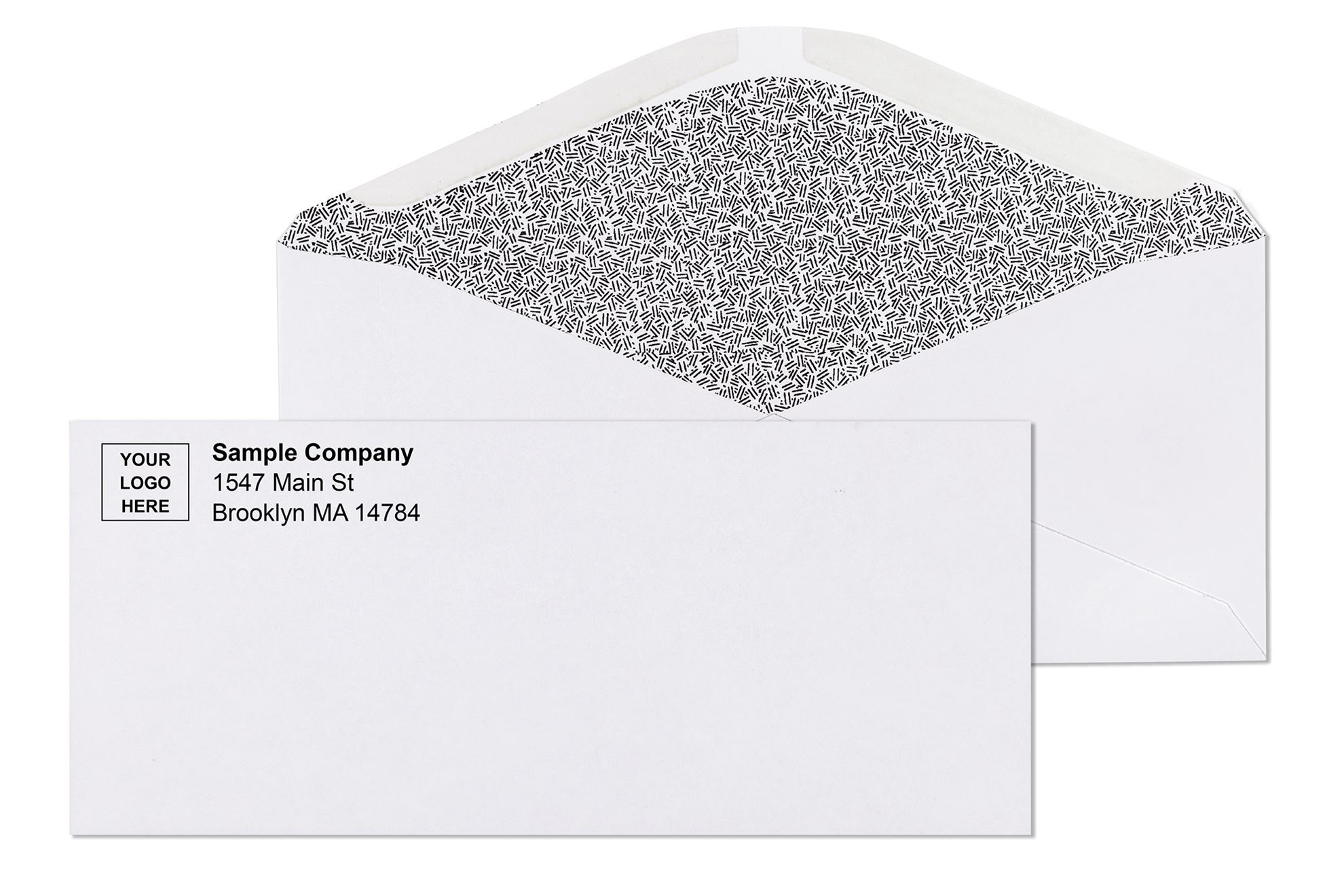
The #10 is the standard US business letter envelope at 4-1/8 x 9-1/2 inches. A standard 8.5 x 11 sheet folds into thirds and slides in cleanly. For a simple return of Form 1040 with no attachments, this is the most economical format at the lowest postage rate.
The practical limit is roughly 6 sheets when folded. Beyond that, the sealed envelope exceeds USPS thickness thresholds for letter-rate mail and either incurs a non-machinable surcharge or requires upgrading to a 9x12. The postage difference matters: a #10 at 1 ounce mails at $0.82 under 2026 First-Class rates, while a 9x12 at 1 ounce mails at $1.63.
Security tinting on #10 envelopes for tax returns
A plain white #10 envelope is readable under bright light. Your Social Security Number, adjusted gross income, and bank routing number are visible to anyone who holds the envelope up to a lamp. Security-tinted #10 envelopes have an interior crosshatch pattern printed on the inside of the envelope that blocks all content from being visible externally. For any mailing containing a tax return, security tinting on the envelope is a simple privacy measure.
For more on how security tinting works and when it is required, see Security Tinted Envelopes: What the Interior Pattern Actually Does and When You Need It.
Browse all #10 formats at #10 envelopes.
9x12 Envelope for Multi-Page Tax Returns
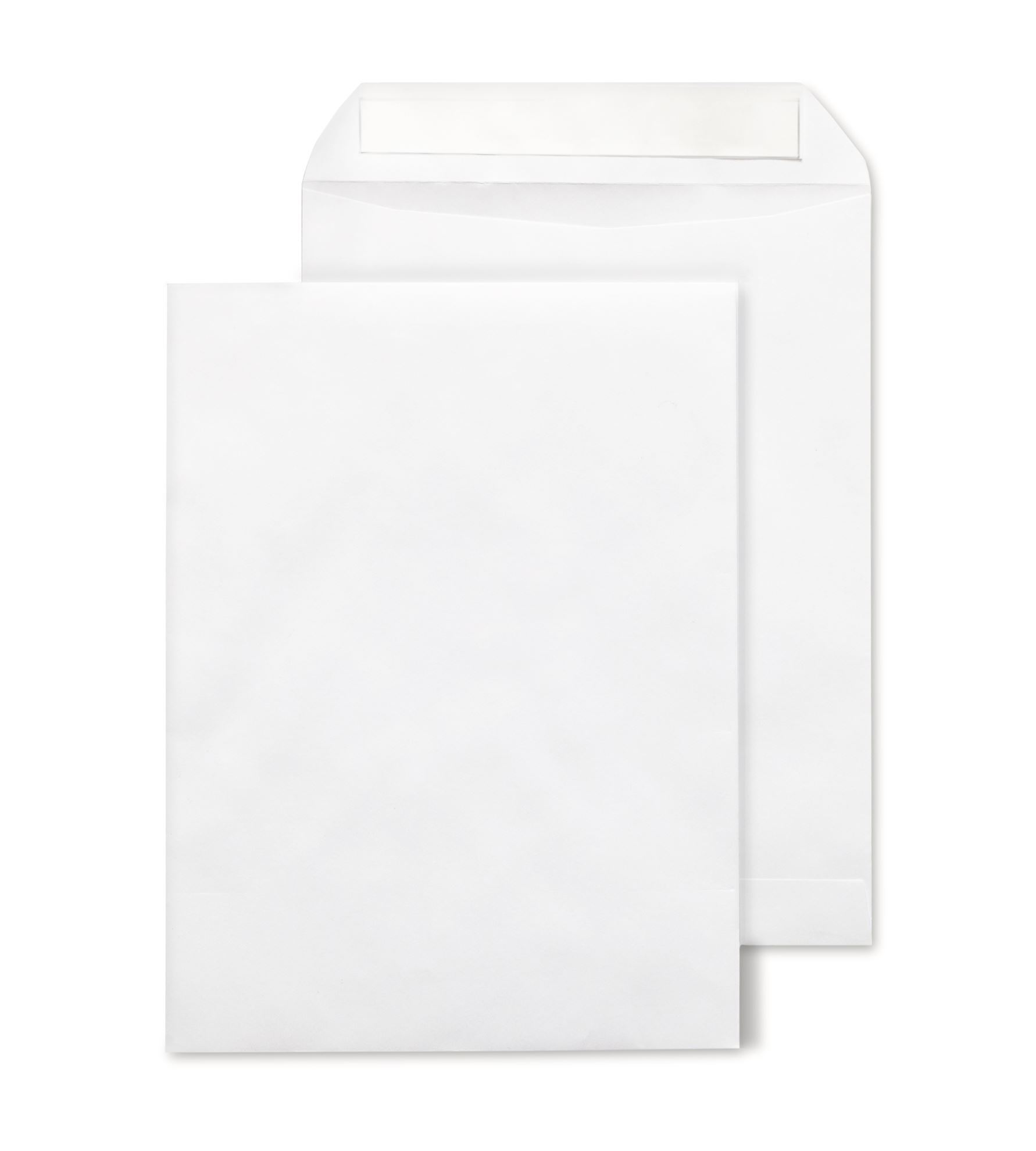
For any tax return that runs more than a few pages, a 9x12 envelope is the correct choice. The 9x12 holds an 8.5 x 11 sheet completely flat without any folding, which means a 15-page return with Schedule A, Schedule C, multiple W-2 copies, and 1099 attachments all go in cleanly without crumpling.
The 9x12 always mails at USPS First-Class flat rate, currently $1.63 for 1 ounce in 2026. This is roughly double the letter rate, but there is no workaround: a 9x12 is classified as a flat regardless of how light the contents are. Add Certified Mail service on top of that rate for tracking and a mailing date record.
Open-end vs booklet 9x12 for tax returns
Both work. An open-end 9x12 opens along the short edge (top) and you load pages by sliding them in from the top. A booklet 9x12 opens along the long edge (side). For inserting a stack of flat documents, most people find the open-end format more natural , you drop the stack in and seal the flap. For the complete format comparison, see the 9x12 Envelope: Size, Uses, Formats, and When to Use It.
Browse all 9x12 formats at 9x12 envelopes.
Tyvek Envelopes for Important and Multi-Document Tax Filings
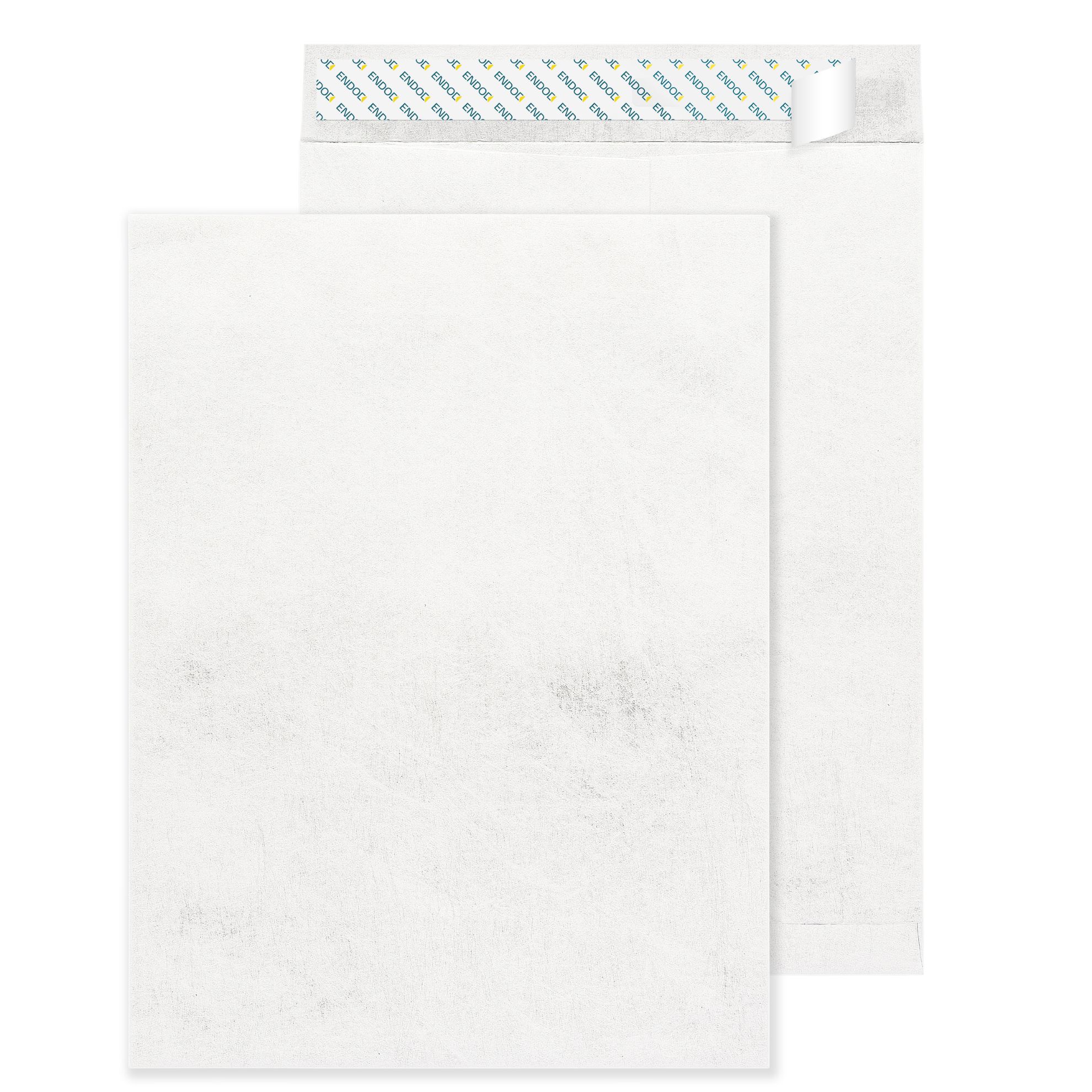
Standard paper envelopes are adequate for most tax returns. Tyvek becomes the right choice when the stakes are higher: amended returns containing original signed documents, multi-year audit responses, tax packets with irreplaceable receipts, or any mailing where the document cannot arrive damaged or illegible.
Tyvek is a spunbonded high-density polyethylene material that resists tearing, repels moisture, and does not soften or disintegrate if it gets wet in transit. A paper envelope in heavy rain or mishandled in a wet sorting facility can arrive with contents unreadable. A Tyvek envelope in the same conditions arrives intact.
The 9x12 Tyvek peel-and-seal is the most commonly ordered format for tax document mailing. It holds an unfolded return, the peel-and-seal closure creates a tamper-evident bond, and the material protects contents through whatever handling the postal route involves. For the complete guide to Tyvek mailing, see Tyvek Envelopes: Tear-Proof and Waterproof Mailing Guide.
Certified Mail for Tax Returns: What It Does and When to Use It
Certified Mail is not required by the IRS but it is the standard recommendation for any paper tax return mailing. Here is what it actually does:
- Mailing date record: USPS provides an electronic timestamp of when the envelope was accepted at the counter. For tax returns mailed on or near April 15, this timestamp is proof that you filed on time even if the IRS processing center does not log receipt for weeks.
- Tracking number: You can track the envelope's progress through the USPS network and confirm delivery to the IRS facility.
- Return Receipt (optional add-on): A physical green card or electronic notification that the IRS signed for the piece. More expensive but provides signed confirmation of receipt.
Certified Mail costs $3.85 per piece in 2026, on top of the postage for the envelope. For a 9x12 at 1 ounce, the total is approximately $5.48 ($1.63 postage + $3.85 Certified). For the full postage cost breakdown by envelope size and weight, see How Many Stamps Do I Need? Complete Guide by Envelope Size.
Envelope for 1099 Forms: Employer Mailing to Recipients
Employers and businesses mailing 1099-NEC or 1099-MISC forms to contractors and vendors by the January 31 deadline have a different envelope requirement from an individual mailing their own return.
1099 form size and envelope compatibility
Standard 1099-NEC and 1099-MISC forms printed on 8.5 x 11 paper belong in a 9x12 envelope that holds them flat. Some payroll software prints 2-up 1099 sheets on a half-page format (approximately 5.5 x 8.5 inches), which fits in a standard #10 when folded once. Check your printed output dimensions before ordering envelopes.
Security tinting for 1099 mailing
A 1099 form contains the recipient's Social Security Number or Employer Identification Number alongside the payment total for the year. These are among the most sensitive data points on any document. Security-tinted envelopes are the standard for 1099 mailing programs because the tinting pattern makes the SSN and EIN unreadable through the envelope under any light source.
For the full guide to security envelope types for sensitive document mailing, see Security Envelopes for Business: What They Are, When You Need Them, and How to Choose.
Self-seal closures for 1099 batch mailing
For employers mailing 50, 100, or 200 1099 envelopes in January, a peel-and-seal or flip-and-stick self-seal closure eliminates the need for a moistener or licking across a large batch. Self-seal 9x12 envelopes are available for exactly this use case. See all formats at self seal envelopes.
W-2 Envelopes: Employer-to-Employee Tax Document Mailing
W-2 mailing is a different program from filing a tax return. Employers distribute W-2 forms to employees by January 31 each year using a security-tinted #10 window envelope that shows the employee's address through a transparent poly-film opening aligned with standard payroll software output.
This format is entirely separate from the envelope an individual uses to file their own return with the IRS. For the complete employer W-2 envelope guide including window alignment specifications, software compatibility, and ordering timelines, see What Size Envelope for W2 Forms: Employer Mailing Guide.
Common Mistakes When Mailing Tax Returns
- Using a #10 for a multi-page return. Forcing 15 pages into a #10 creates a bulge that can cause the envelope to be returned or trigger a non-machinable surcharge. Use a 9x12 for any return that does not fold cleanly into three sections.
- Skipping security tinting. A plain white envelope holding a tax return is readable under light. Your SSN is visible to anyone in the postal handling chain who wants to look. Security tinting costs nothing extra at the point of ordering envelopes.
- No return address. An undeliverable tax return without a return address goes to the Mail Recovery Center. You have no way to know the IRS never received it. Always include a return address.
- Wrong IRS address for your return type. The IRS sorting address depends on the form type, your state, and whether you are enclosing a payment. Confirm the correct address at IRS.gov before sealing. The envelope format does not matter if it goes to the wrong facility.
- Mailing near the April 15 deadline without Certified Mail. First-Class Mail without a certified tracking number gives you no proof of the mailing date. Mail close to the deadline? Certified Mail is the practical protection.
- Forgetting to weigh a multi-document return. A return with schedules, W-2 copies, and 1099 attachments often exceeds 1 ounce. Underpaid postage results in the envelope being returned or delivered postage-due to the IRS , which may then be refused.
2026 USPS Postage: Tax Return Mailing Cost Reference
| Envelope | 1 oz (2026) | 2 oz (2026) | +Certified Mail |
|---|---|---|---|
| #10 (letter) | $0.82 | $1.09 | + $3.85 |
| 9x12 (flat) | $1.63 | $1.90 | + $3.85 |
| 10x13 (flat) | $1.63 | $1.90 | + $3.85 |
For non-machinable surcharges that apply when an envelope is too thick, rigid, or oddly shaped for automated processing, see Non-Machinable Envelope Guide: Surcharge Rules Explained. For the complete mailing guide, see Mailing and Sending Letters: The Complete US Business Guide.
What Customers Say About Business Envelopes
★★★★★ Jacob, Verified Buyer | #10 White Wove Printed Envelopes
"I am very pleased with these envelopes and will order again! Great product and shipped very well! Better than I get from local office supply and a better value!"
★★★★★ Jacob, Verified Buyer | 9x12 White Open-End Printed Envelopes
"Very happy with these envelopes. They arrived in pristine condition and are just great for mailing letter sized documents."
★★★★★ Rikki, Verified Buyer | 9x12 White Booklet Printed Envelopes
"I use these for both mailing and filing. They hold a lot of paperwork and are great quality."