

Quick answer: Self adhesive envelopes seal without moisture. Peel-and-seal uses a release liner that keeps the adhesive inactive until deliberately peeled. Ideal for pre-staged batches, tamper-evident mail, and HIPAA correspondence. Flip-and-stick has no liner and seals faster per piece, but has a 6 to 12 month shelf life. Both are laser-printer safe. Both pass through USPS automated sorting. Neither works with a mailing machine inserter's built-in sealing unit. No minimum order. Free ground shipping on every order from Business Envelopes.
Introduction
Most people buy envelopes the same way they buy pens: grab whatever is in stock and move on. That works fine at low volume. It stops working the moment you are running a 500-piece billing cycle every month and someone on your team is spending half an hour hunched over a wet sponge before the mail goes out.
Switching to a self adhesive envelope sounds like a small operational upgrade, but it removes an entire failure point from your mailing workflow. No moisture, no inconsistency, no flaps lifting in transit. The adhesive is already on the envelope. You peel or press, and it is done.
What most buyers do not realize before they order is that there are two different closure types inside this category, and choosing the wrong one for your workflow creates its own set of problems.
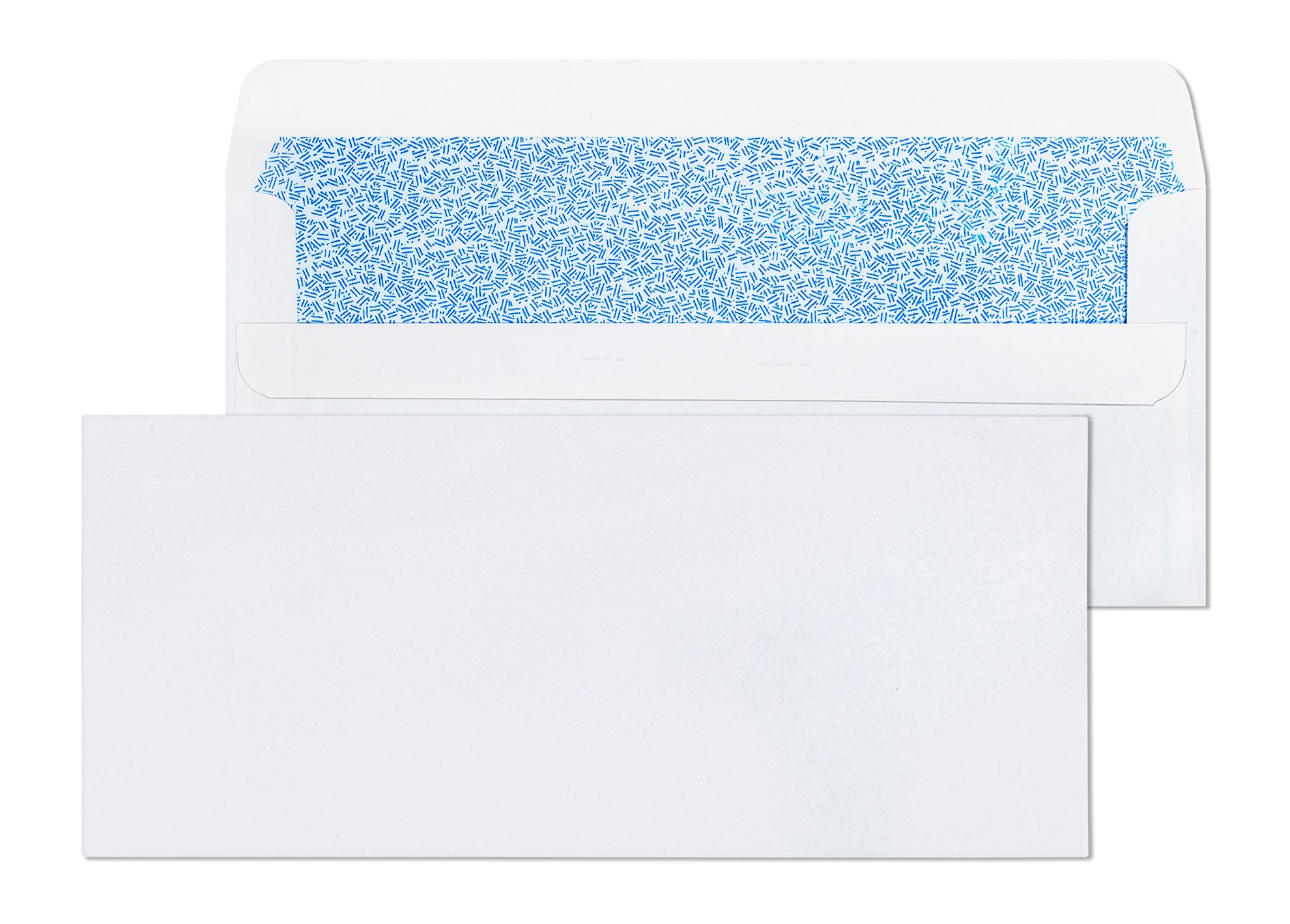
Two Closure Types, One Category and Why the Difference Actually Matters
The terms "self seal," "peel and seal," and "flip and stick" get used interchangeably online, but they describe two distinct products with different mechanics, different shelf lives, and different best-use scenarios.
Peel and seal envelopes have a pressure-sensitive adhesive strip on the flap, covered by a waxy release liner. You pull the liner off, fold the flap down, and press. The adhesive bonds immediately on contact. No activation time, no moisture needed. The liner is what makes this format reliable in storage. It keeps the adhesive completely inert until you deliberately remove it, which means pre-stuffed envelopes sitting in a box for two or three days before the mailing date seal just as cleanly as envelopes processed immediately. That is a significant operational advantage for any team that stages mail before it goes out.
Peel and seal also provides a tamper-evident seal. Most formats include security slits cut into the flap. If someone tries to open a sealed envelope, the flap tears visibly along those lines, which matters for payroll correspondence, financial statements, medical records, and anything where the recipient needs to trust that the contents arrived intact.
One technical limitation worth noting: peel and seal is not compatible with automatic mail insertion equipment. The liner removal step is manual, and inserter machines are not built to handle it. If your team uses a mailing machine that inserts and seals automatically, this is not the right format.
Flip and stick skips the liner entirely. An adhesive panel sits exposed on the envelope body, and a short tab on the flap folds over to contact it. Two adhesive surfaces press together and bond instantly. Because there is no liner to peel first, the sealing motion is faster per piece, which matters in a continuous high-volume run where speed is the priority.
The tradeoff is shelf life. The latex adhesive in flip and stick formats degrades over time, particularly in warm or humid storage conditions. Most guidance puts the reliable window at six to twelve months from manufacturing. Envelopes stored longer than that may not bond securely.
Explore the full range of self seal envelopes, both peel and seal and flip and stick, across every standard business size. For the complete technical comparison of both closure systems, see the Peel-and-Seal vs Flip-and-Stick Self-Seal Envelope Guide.
Where Gum Flap Envelopes Start Failing at Scale
If gum flap has been working for your operation, that is real. But "working" at small volumes often masks a failure rate that becomes expensive at scale. Gum requires moisture to activate, and moisture application is not consistent. Different people apply different amounts. The flap gets held for different durations. Some envelopes seal cleanly. Others bond at the edges but lift in the middle when the piece flexes inside a postal sorting tray.
A percentage of your mailing arrives at the destination looking like it was opened in transit, even when it was not. For a company mailing account statements, explanation-of-benefits letters, or payroll notices, an envelope arriving with the flap visibly compromised is a trust issue before the recipient reads a word. For a healthcare provider, it may be a compliance issue. The professional presentation of everything printed on the outside gets undermined by a seal that could not hold through automated postal handling.
The failure rate difference is real. Gum flap envelopes fail at roughly 2 to 5 percent depending on humidity, water volume applied, and sponge freshness. That means 20 to 50 pieces per 1,000 arrive partially or fully open. Self adhesive envelopes, both peel-and-seal and flip-and-stick, have an effectively zero failure rate when stored under normal office conditions. The adhesive does not depend on technique, moisture consistency, or sponge condition.
Then there is the labor math. A 500-piece billing run with gum flap typically costs your team 30 to 45 minutes in sealing time: sponge moistening, pressing, waiting. That recurs every billing cycle. Every payroll run. Every direct mail campaign. The per-unit cost difference between gum and peel and seal is marginal. The compounding labor cost over twelve months usually is not.
For the complete guide on sealing methods and how to choose the right approach for your operation, see How to Seal an Envelope: The Right Way for Every Type and Size.
Peel-and-Seal vs Flip-and-Stick: Side-by-Side Comparison
The two closure types are not interchangeable. Each one is correct for specific use cases and fails in others. This table shows exactly where each format performs and where it does not.
| Factor | Peel-and-Seal | Flip-and-Stick |
|---|---|---|
| How it seals | Peel the release liner, fold the flap down and press | Fold the tab over to contact the exposed adhesive panel |
| Shelf life in storage | Long-term. Liner keeps adhesive inactive until removed | 6 to 12 months from manufacturing. Exposed latex degrades in heat and humidity |
| Tamper-evident | Yes. Security slits tear visibly if someone tries to open a sealed piece | No tamper-evident feature |
| Pre-staging batches | Yes. Pre-stuffed batches hold for days before sealing | Not recommended. Adhesive may weaken with ambient humidity over time |
| USPS postal sorting | Yes. Sealed flap holds through automated postal sorting | Yes. Sealed flap holds through automated postal sorting |
| Inserter machine sealing | No. Liner removal is manual; inserters cannot process peel-and-seal | No. Neither format can be sealed by a standard gum-flap inserter unit |
| Laser printer compatible | Yes. Adhesive is on the flap only; print the face before sealing | Yes. Same laser-safe specification |
| Best use cases | Billing, payroll, healthcare, legal, pre-staged batches, sensitive correspondence | High-volume continuous runs where speed per piece is the top priority |
| Where to avoid | Any operation using a mailing machine inserter sealing unit | Long-term inventory programs, seasonal stock, HIPAA or tamper-evident requirements |
Who Uses Self Adhesive Envelopes
Self adhesive envelopes are the standard across commercial mailing programs in virtually every industry. The common factor is any operation that sends more than a few dozen pieces per cycle and cannot afford inconsistent seals, labor bottlenecks, or compromised mail arriving at the destination.
Healthcare and Medical Offices
Patient billing, explanation-of-benefits letters, lab result notices, and appointment correspondence. Peel-and-seal with security tint interior is the standard choice for HIPAA-applicable correspondence because the tamper-evident flap shows if a piece was opened in transit.
Accounting and Payroll Teams
Payroll notices, W-2 and tax form mailings, check distribution packets. Security tint prevents document contents from showing through the paper. Peel-and-seal provides the tamper evidence payroll recipients expect. See the payroll envelope guide for format details.
Legal Offices
Privileged correspondence, court filings, client documents, and contract packets. Legal offices use peel-and-seal because the tamper-evident flap confirms that documents arrived intact. 9x12 peel-and-seal covers flat document packets that cannot be folded.
Billing Departments
Monthly statement runs, invoice mailings, and payment-due notices. The #10 window flip-and-stick is what high-volume billing departments use: the address window eliminates the addressing step, and flip-and-stick speeds sealing on continuous runs of 500 or more pieces.
Nonprofits and Fundraising
Donation appeals, acknowledgement letters, and reply envelope inserts. The #6 3/4 peel-and-seal is the standard reply envelope format: it nests inside a #10 outgoing envelope and comes back as the pre-addressed return piece with a tamper-evident seal the donor controls.
Real Estate
Listing packages, closing documents, disclosure packets, and lease mailings. 9x12 peel-and-seal holds an 8.5x11 sheet flat without folding. For moisture-sensitive originals like signed contracts, Tyvek peel-and-seal is tear-proof and moisture-resistant.
Financial Services and Insurance
Account statements, policy documents, premium notices, and explanation-of-benefits mailings. Security tint plus tamper-evident peel-and-seal is the expected standard for recipients receiving financial correspondence by mail.
Direct Mail Programs
Acquisition mailings, response packets, and campaign correspondence. For programs where the recipient address prints on the document inside, the double-window flip-and-stick removes the addressing step entirely. For programs requiring tamper evidence or pre-staging, peel-and-seal is the default. See the direct mail envelope guide for format options.
Self Adhesive Envelopes for HIPAA-Compliant Healthcare Mail
HIPAA does not specify a required envelope type for patient correspondence, but it does require physical safeguards that protect patient health information in transit. Peel-and-seal envelopes with security tint interior are widely used as best practice for HIPAA-applicable correspondence. The tint interior blocks protected health information from being visible through the paper wall. The tamper-evident flap signals to the patient if the envelope was opened before delivery.
For patient billing, explanation-of-benefits mailings, and any correspondence containing protected health information, the combination of #10 security tinted peel-and-seal with no PHI printed on the outer envelope surface is the standard commercial implementation. For document-heavy compliance mailings (multiple pages, lab results, longer correspondence), the 9x12 peel-and-seal booklet holds an 8.5x11 packet flat. For mail security guidance, see Security Envelopes for Business: The Complete Guide.
Self Adhesive Envelopes for Payroll Correspondence
Payroll envelopes require two things that self adhesive formats deliver well: a seal that does not fail between your office and the employee, and a tamper-evident close that confirms the contents arrived intact. Gum flap envelopes with inconsistent moisture application can arrive partially open, which is a trust issue in a payroll context before the recipient sees a word of the enclosed document.
The double-window peel-and-seal check format is the standard for payroll check distribution programs aligned with QuickBooks, Quicken, Sage, and standard laser check layouts. The #10 security tinted peel-and-seal is standard for payroll notices, W-2 packets, and benefit statements that do not require the double-window alignment. For the complete payroll envelope guide, see Payroll Envelopes: Double Window, Security, and Size Guide.
Can Self Adhesive Envelopes Go Through Postal Sorting Machines?
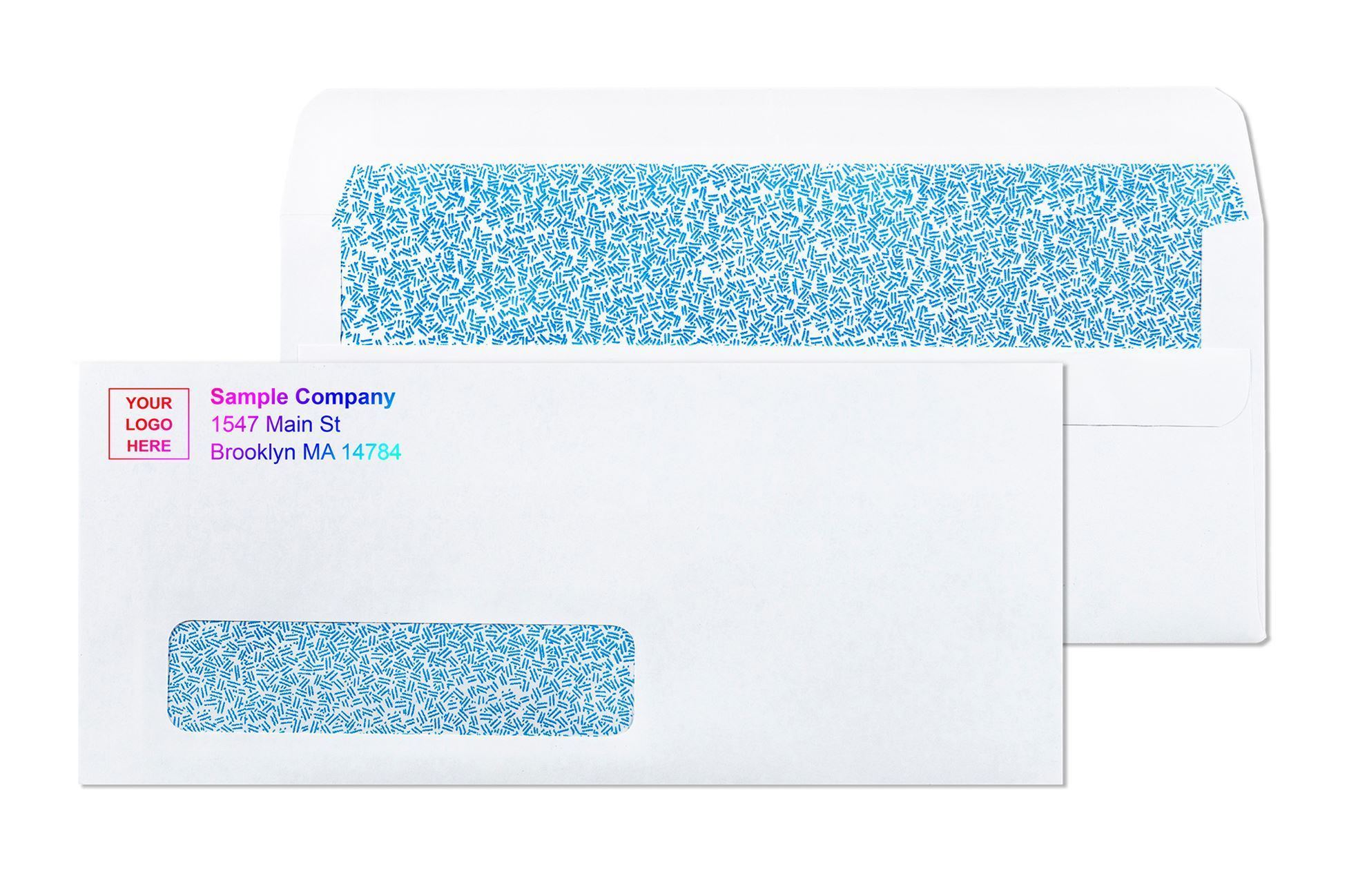
Yes. Both peel-and-seal and flip-and-stick envelopes pass through USPS automated postal sorting without issue. Once sealed, the pressure-sensitive adhesive creates a bond strong enough to hold through high-speed mechanical sorting equipment, postal trays, and the physical handling of standard domestic mail delivery. This is a consistent advantage over gum flap envelopes, which can fail during sorting when the adhesive was not applied correctly.
For any standard First-Class mailing, self adhesive envelopes are fully USPS-compatible. The sealed flap does not trigger any USPS handling restrictions, surcharges, or non-machinable classifications on its own. Size, weight, and aspect ratio determine mailability and postage class. For the complete guide to USPS postage rules and non-machinable surcharges, see Non-Machinable Envelope Guide: Surcharge Rules Explained.
Paper Weight, Printer Compatibility, and Storage
Can You Print on Self Adhesive Envelopes Before Sealing?
Yes, and this is exactly how commercial operations use them. All white wove self adhesive envelopes in this range carry a laser-safe specification. The adhesive is on the flap only, not on the envelope face or interior. Print the return address, recipient address, mailing indicia, or any custom design directly on the envelope face before you load and seal. The stock passes through the printer's fuser unit without the adhesive activating or causing jams on HP, Brother, Canon, Xerox, and other standard office laser printers. For the complete printer compatibility guide, see Laser Printer Envelopes: Which Formats Work and Why.
Paper Weight
The standard specification for all white wove self adhesive envelopes in this range is 24 lb bond paper. At 24 lb, the stock is substantial enough that document contents do not show through the paper wall when held up to light, especially when combined with the security tint interior that all tinted formats include. The 24 lb specification runs cleanly through standard office laser printers without feeding issues or edge curling. For the complete explanation of how paper weights affect opacity, durability, and printer compatibility, see the Envelope Paper Weight Guide: 20 lb, 24 lb, 28 lb Explained.
How Long Do Self Adhesive Envelopes Last in Storage?
Peel-and-seal formats can be stored for years under normal office conditions. The release liner keeps the adhesive completely isolated from air, humidity, and accidental contact. There is no meaningful degradation of the adhesive strip under the liner in a standard climate-controlled indoor environment, which makes peel-and-seal the practical choice for any organization that orders stock in advance or runs seasonal programs with months between orders.
Flip-and-stick formats have a reliable shelf life of 6 to 12 months from the manufacturing date. The exposed latex adhesive begins to degrade when the stock is exposed to heat above 75 degrees Fahrenheit or humidity above 60 percent relative humidity. In continuous-use programs where stock turns over every few weeks, shelf life is not a practical concern. In programs where stock sits for months, peel-and-seal is the safer specification.
What Temperature and Humidity Should I Store Self Adhesive Envelopes In?
Store all self adhesive envelopes at 65 to 75 degrees Fahrenheit with relative humidity between 40 and 55 percent. These are standard office conditions that both closure types tolerate without adhesive degradation over the recommended shelf life periods.
- Do not store near heating vents, radiators, or HVAC discharge areas
- Do not store in direct sun exposure or in vehicles
- Do not store in unconditioned spaces: attics, basements, or warehouses without climate control
- Do not compress large stacks under heavy weight: sustained pressure can partially pre-activate the adhesive strip even through a release liner
- Keep boxes closed in original packaging until day of use: dust and environmental contaminants can reduce bond strength on exposed flip-and-stick adhesive surfaces
- Store boxes flat, not standing on edge
| Specification | Peel-and-Seal | Flip-and-Stick |
|---|---|---|
| Paper weight | 24 lb bond wove | 24 lb bond wove |
| Laser printer safe | Yes | Yes |
| Interior security tint | Yes (on tinted formats) | Yes (on tinted formats) |
| Shelf life (stored stock) | Long-term. Liner protects adhesive indefinitely in normal conditions | 6 to 12 months from manufacturing date |
| Storage temp | 65 to 75 degrees Fahrenheit | 65 to 75 degrees Fahrenheit |
| Storage humidity | 40 to 55 percent RH | 40 to 55 percent RH (more sensitive) |
| Custom printing available | Yes. Logo, return address, mailing indicia | Yes. Logo, return address, mailing indicia |
| USPS postal sorting | Yes | Yes |
Matching the Right Format to Every Part of Your Mailing Program
This is where most businesses either get it right or find out later they did not. Picking the right peel and seal or flip and stick format for each use case in your operation is what keeps each part of the mailing workflow running without friction.
Standard business correspondence and billing
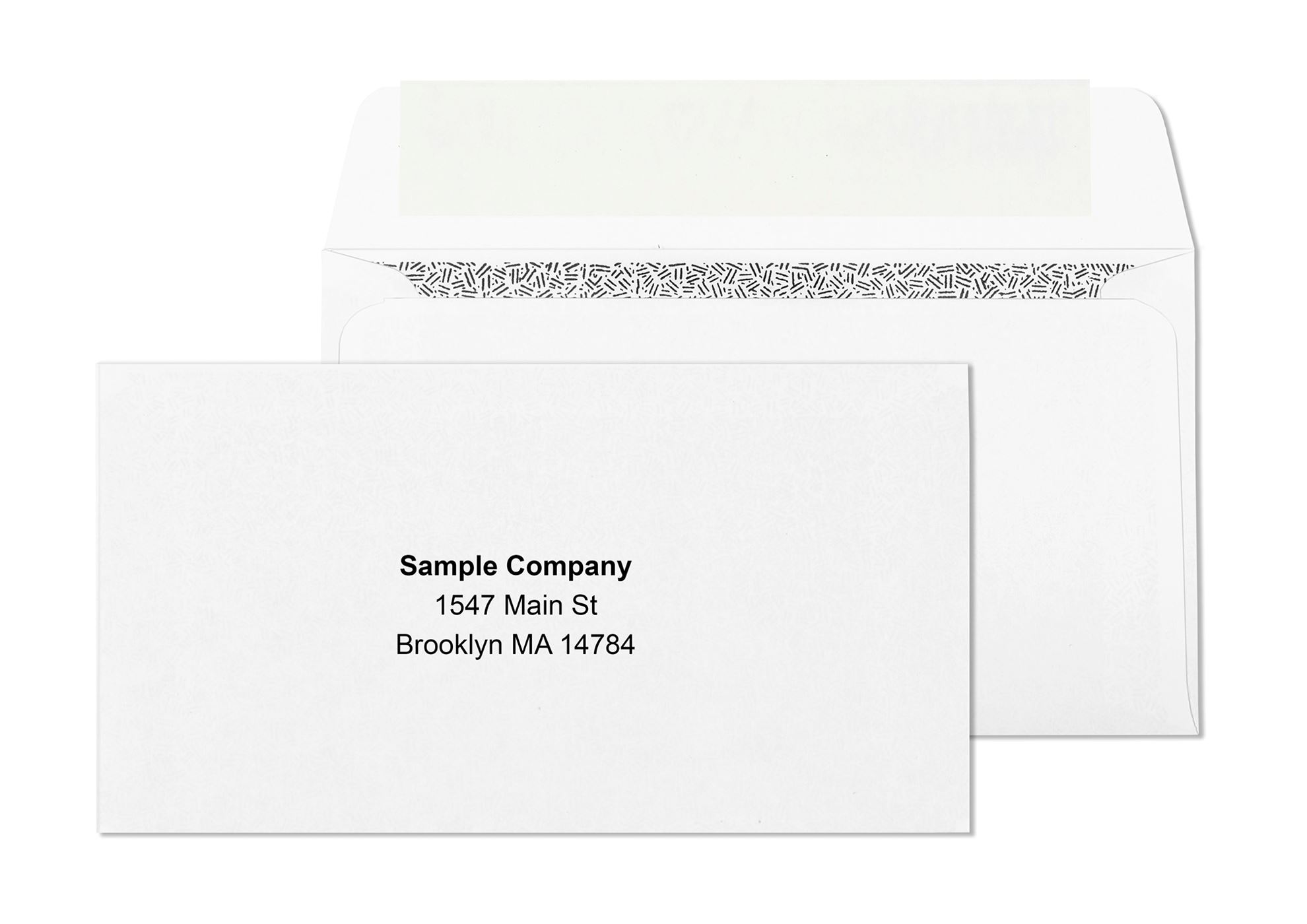
The standard for most billing and statement programs is the #10 security tinted peel and seal. Security tint interior blocks document contents from showing through the paper when held up to light, which is the standard specification for financial, payroll, and healthcare correspondence. All #10 envelopes in this format are laser-safe, so the stock runs through your printer before sealing without any jamming risk.
For statement and invoice runs where speed per piece is the priority, the #10 window flip and stick is what billing departments and medical offices use. The address window aligns with the recipient address printed on the document inside, which removes the addressing step from the workflow entirely. No labels, no handwriting, no merge printing on the envelope itself. For the complete guide to security tinted formats, see Security Tinted Envelopes: What They Are and When to Use.
Check and invoice formats
The double window check peel and seal has two poly-film windows pre-aligned with QuickBooks, Quicken, Sage, and standard laser check formats. Both the return address and the recipient address pull from the printed check inside. Nothing to label, nothing to address by hand. Peel, press, run.
For invoice and statement runs where continuous volume is the workflow, the double window flip and stick check envelope handles the same setup with a faster per-piece sealing motion. For dedicated invoice and statement programs on a #10 format, the double window invoice envelope uses flip and stick closure with security tint interior and both address windows pulling from the document. For the complete double window guide, see Double Window Envelopes: Check, Payroll and Invoice Guide.
Return envelopes
The #6 3/4 peel and seal fits inside a standard #10 outgoing envelope and comes back as the pre-addressed return piece. Standard format for donation programs, payment response mailings, and billing cycles where the recipient mails back a check or payment stub. The security tint interior covers whatever the recipient encloses on the return.
The #9 peel and seal is the alternative return size. It nests inside a standard #10 outer mailer the same way, carries the same security tint specification, and works for any program where the #9 is the preferred return format.
Flat document mailers
For contracts, reports, certificates, brochures, and anything that cannot be folded into a standard #10, the 9x12 peel and seal booklet envelope holds an 8.5x11 sheet completely flat with no creasing. Side opening makes loading a full document packet faster than a top-open format.
For documents where arrival condition genuinely is not negotiable (anything moisture-sensitive, anything that cannot be recreated, anything where a torn or water-damaged delivery creates a real problem), the Tyvek peel and seal format is tear-proof, puncture-resistant, and moisture-resistant. The Kwik-Tak closure bonds the same way as standard peel and seal, with no moisture required.
Why High-Volume Mailers Order Their Custom Printed Envelopes Here
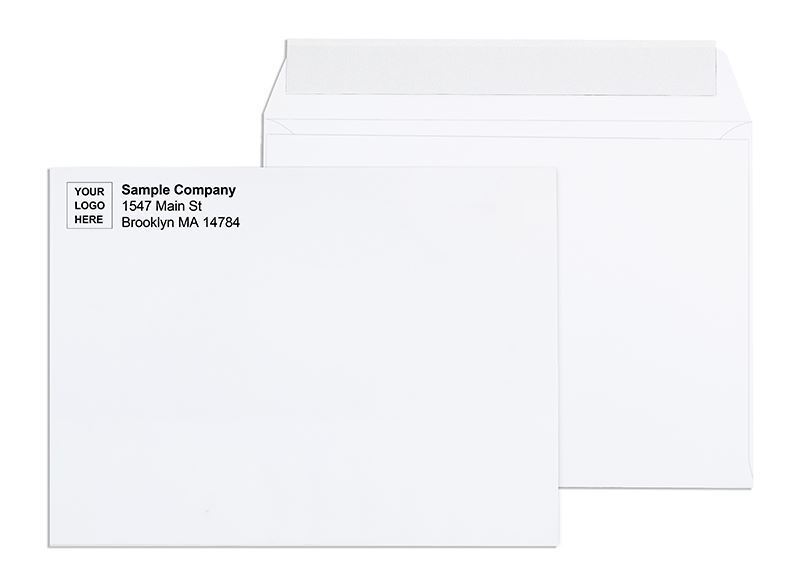
Custom printing on self sealing envelopes tends to get overcomplicated by most suppliers. High minimums that only pencil out at 10,000 units. Separate artwork submissions for every size. Long lead times that make reprinting feel like launching a project.
At Business Envelopes, every self seal format in the catalog supports custom printing: logo, return address, company name, and mailing indicia printed directly on the envelope face, not applied as a label. The adhesive sits on the flap, not the face, so the print surface is clean and the registration is consistent whether you are printing in black and white or full color.
There is no minimum order. A healthcare practice mailing #10 tinted self seal for billing and 9x12 peel and seal for document packages does not need to commit to 5,000 units of each to get branded stock. They order what the program actually requires.
For organizations running multiple formats, the artwork handling is what saves real time on an ongoing basis. Once your design is approved and on file, it applies across every size and format in your program without re-submitting files or running new proof cycles on every reorder. A legal office running four formats (#10 billing, #9 return, 9x12 document mailer, and double window check) manages one approved design file, not four.
Every job goes to a PDF proof before production. Nothing prints without your sign-off. Custom stock ships within seven to ten business days from proof approval. Blank stock ships same or next business day. For the complete custom printing guide, see Custom Printed Envelopes: Logo Return Address Design Guide.
Conclusion
Switching to no-moisture sealing is not a dramatic change. It just removes a task that was adding time and inconsistency to every mailing run. A proper self adhesive envelope program, matched to your actual use cases across the right sizes and closure types, is simple to build.
Peel and seal for anything pre-stuffed, stored, or tamper-sensitive. Flip and stick for continuous high-volume runs where speed per piece is what matters. Custom printed or blank, the full format lineup from Business Envelopes covers every standard commercial mailing need with free shipping and no minimums.
The labor your team recovers in the first mailing cycle usually covers any per-unit cost difference. The consistency across every mailing run after that is just the new standard. For the complete self seal envelope guide including technical specifications and buying recommendations, see Self Seal Envelopes: Peel-and-Seal vs Flip-and-Stick Guide.
What Customers Say
★★★★★ Rikki Verified Buyer | #10 White Tinted Self Sealing Envelopes
"Flip and stick with no annoying strip to peel makes this the only choice."
★★★★★ Claire Verified Buyer | Double Window Check Peel-and-Seal Envelopes
"The amount of adhesive on the envelopes is just right and when you pull the strip to seal you don't end up with sticky residue. These are much better than the ones I was previously purchasing."
★★★★★ Malky Verified Buyer | #6 3/4 Security Tinted Peel-and-Seal Envelopes
"Love the seal strip and security feature. The price is great."