 Free shipping

What Size Envelope Fits a Folded 8.5x11 Sheet of Paper?
- Tri-folded (thirds): #10 envelope (4-1/8 x 9-1/2 in): USPS letter rate
- Half-folded (bi-fold): 6x9 booklet envelope (6 x 9 in): USPS letter rate
- No fold (flat): 9x12 envelope (9 x 12 in): USPS flat rate
Which Envelope Size Fits an 8.5x11 Sheet, and Why It Depends on the Fold
This is one of the most common questions in business mailing. The short version: there is no single answer because the envelope you need depends on what you do to the paper before inserting it. Fold it in thirds and it fits a #10. Fold it in half and it fits a 6x9. Leave it flat and it fits a 9x12.
Each of those three choices carries a different consequence: a different postage rate, a different envelope format, a different sheet capacity, and a different set of rules if you want to use a window envelope. This guide walks through each option in full, including the Z-fold technique for window envelopes, the clearance rule most people skip, the international equivalent sizes for A4 paper, envelope options for legal-size documents, and when not folding your document is the right professional choice.
The #10 Envelope: The Right Size for an 8.5x11 Sheet Folded in Thirds
The #10 envelope measures 4-1/8 x 9-1/2 inches with an interior space of roughly 3-7/8 x 9-1/4 inches. When you fold an 8.5x11 sheet in thirds, the result is approximately 3.6875 x 8.5 inches, which fits cleanly inside with clearance on all sides.
This is the standard format for US business correspondence. Invoices, cover letters, billing statements, payroll letters, insurance notices, and legal correspondence all use this combination. The #10 qualifies for USPS First-Class letter rate, which is the most cost-efficient postage class for standard business mail.
How the tri-fold works and why the panel sizes are not equal
A standard tri-fold, also called a letter fold or C-fold, divides the sheet into three panels. The innermost panel is slightly narrower (about 3.625 inches) than the two outer panels (about 3.6875 inches each). This slight difference ensures the inner panel sits cleanly inside without resistance. When you fold a sheet without accounting for this, the fold can bunch or resist. The outer panel folds down over the inner panel, and the result slides into the envelope with the open edge facing the flap.
How many sheets of 8.5x11 paper fit in a #10 envelope?
Up to three sheets of standard 20 lb copy paper fit cleanly when tri-folded. A fourth sheet is possible but the flap may not seat flat, which can cause the envelope to open in transit or trigger a non-machinable surcharge from USPS. For mailings with four or more sheets, step up to a #11 envelope (4-1/2 x 10-3/8 inches), which accepts a tri-folded 8.5x11 sheet with more interior clearance for thicker packets.
What postage does a #10 envelope use?
The #10 qualifies for USPS First-Class letter rate, which is the standard stamp rate, as long as the sealed piece stays within the letter-size limits: no more than 6-1/8 inches tall, 11-1/2 inches long, and 1/4 inch thick. A single tri-folded letter sheet weighs well under the 1-ounce threshold for a single stamp. As you add more sheets or enclosures, weigh the sealed envelope to confirm which postage tier applies.
Why a Z-Fold Is Required When Using a #10 Window Envelope
This is where most office mailing programs go wrong. If you use a standard C-fold (the fold described above) and insert the letter into a window envelope, the address block sits on the inside face of the letter and is hidden behind the envelope body. USPS will not be able to read the address, and you may receive the piece back.
What a Z-fold does differently
A Z-fold folds the sheet in thirds in the opposite direction, so the result looks like the letter Z when viewed from the side. The address panel faces outward when the letter is inserted, aligning behind the window film. The closed-fold edge enters the envelope first, address panel toward the window side.
USPS requires at least 1/8-inch clearance between the address text and all four edges of the window opening. Before running a large batch, test-insert one document, hold the sealed envelope up to the light, and confirm the full address block is visible with clearance on all four sides. Adjust the address block position in your document template if it is off.
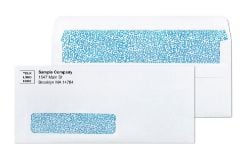
What about double window envelopes?
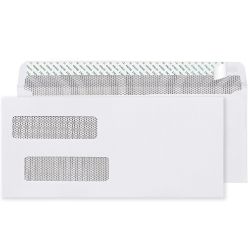
Double window envelopes have two openings: one for the delivery address and one for the return address. Both addresses are printed on the document itself and appear through the windows when the document is folded and inserted correctly. This eliminates the addressing step entirely and is the standard format for invoicing, payroll, billing statements, and accounts payable programs where both addresses come from the accounting or ERP system.
The 6x9 Envelope: The Right Size for an 8.5x11 Sheet Folded in Half
When you fold an 8.5x11 sheet in half, the result is 5.5 x 8.5 inches. That is far too wide for a #10 (which has a 4-inch interior width). The correct size is a 6x9 booklet envelope, which has an interior of approximately 5.75 x 8.75 inches. The half-folded sheet fits cleanly with clearance on all sides.
What is the 6x9 used for?
The 6x9 is common for brochures, folded marketing flyers, church bulletins, graduation programs, real estate materials, and newsletters. The booklet style opens on the long edge, which makes machine insertion fast and practical at volume. If you are mailing content that fills a half-sheet and would look cramped or folded oddly in a smaller envelope, the 6x9 is the right format.
Does a 6x9 envelope qualify for USPS letter rate?
Yes. A 6x9 falls within USPS letter-size limits (no taller than 6-1/8 inches, no longer than 11-1/2 inches), so it qualifies for First-Class letter rate as long as the sealed piece stays within the weight and thickness limits. Heavier brochure stock or multiple inserts can push the piece past the letter-size thickness limit of 1/4 inch, at which point it mails as a flat instead.
The 9x12 Envelope: When You Need to Mail an 8.5x11 Sheet Without Folding It
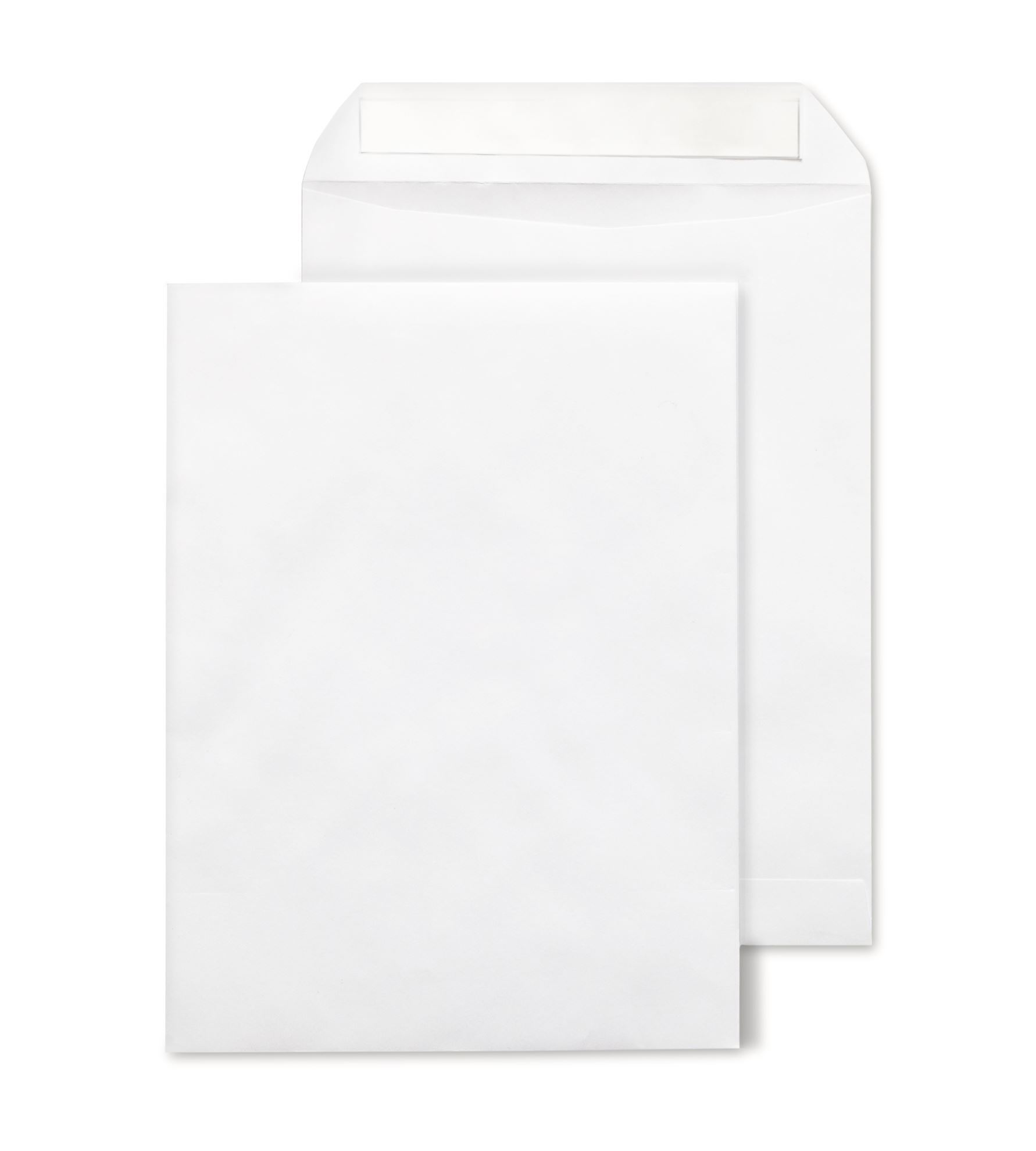
A 9x12 envelope holds an 8.5x11 sheet flat with approximately 1/4-inch clearance on all sides. No folding required. The interior measures approximately 8-3/4 x 11-3/4 inches.
When should you choose a 9x12 instead of folding?
Several document types should not be folded:
- Resumes and cover letters: Job seekers and HR departments routinely use 9x12 envelopes to mail resume packets without folding, because a crease across a resume looks unprofessional. If a candidate takes the time to print on quality paper, mailing flat is the correct presentation choice.
- Contracts, legal documents, and executed agreements: Folding creates creases along signature lines and can complicate notarization or filing.
- Certificates and awards: These should arrive flat.
- Architectural drawings, technical diagrams, or printing proofs: Folding distorts precision work.
- Multi-page packets or documents with a backing board: When sheet count or content weight makes folding impractical, the 9x12 is the natural choice.
Is a 9x12 classified as a letter or a flat by USPS?
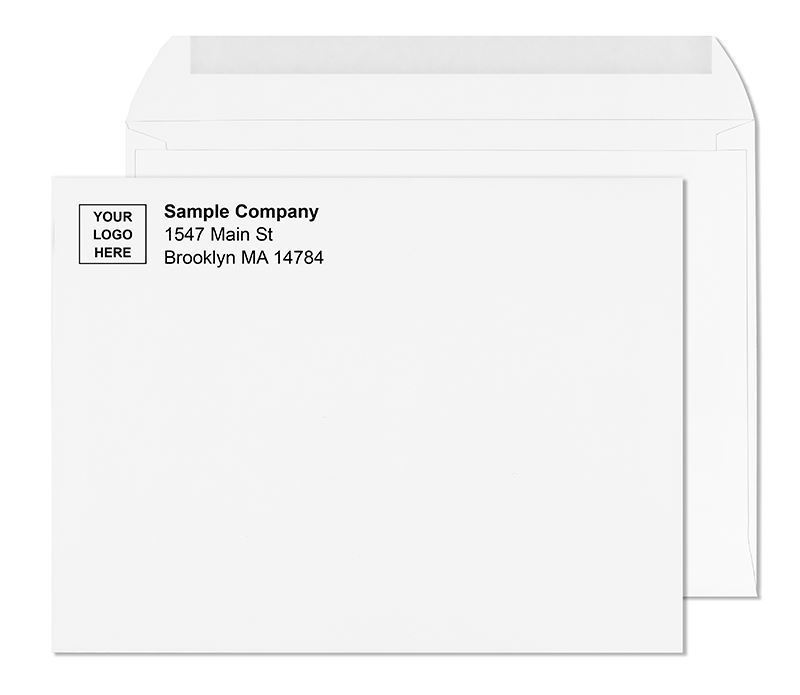
USPS classifies a 9x12 as a large envelope, also called a flat. It exceeds the letter-rate height limit of 6-1/8 inches and the letter-rate length limit of 11-1/2 inches, so it always mails at the First-Class flat rate regardless of weight or contents. There is no version of a 9x12 mailing that qualifies for standard letter postage.
What about the 10x13 envelope for larger packets?
A 10x13 envelope provides approximately one inch of clearance around an 8.5x11 sheet, compared to roughly 1/4 inch in the 9x12. It is the better choice when: the packet is thick enough to force the 9x12 flap; the document has a printed border close to the edge; or the stack includes a bound booklet, presentation folder, or stiff backing board. Both sizes mail at the same flat rate for the same total weight.
Quick Reference: Which Envelope Size for Each Fold Type
| Fold Type | Folded Size | Correct Envelope | Interior Dimensions | USPS Rate | Window Envelope? |
|---|---|---|---|---|---|
| Tri-fold (C-fold or Z-fold) | 3.6875 x 8.5 in | #10 (4-1/8 x 9-1/2 in) | ~3-7/8 x 9-1/4 in | First-Class Letter | Yes, with Z-fold only |
| Half-fold (bi-fold) | 5.5 x 8.5 in | 6x9 Booklet | ~5.75 x 8.75 in | First-Class Letter | No (limited options) |
| No fold (flat) | 8.5 x 11 in | 9x12 | ~8-3/4 x 11-3/4 in | First-Class Flat | Some styles available |
| Quarter-fold (4-panel) | 4.25 x 5.5 in | A9 (5-3/4 x 8-3/4 in) | ~5.5 x 8.5 in | First-Class Letter | No |
| Z-fold (for window) | 3.667 x 8.5 in | #10 Window | ~3-7/8 x 9-1/4 in | First-Class Letter | Yes |
| No fold (professional resume) | 8.5 x 11 in | 9x12 | ~8-3/4 x 11-3/4 in | First-Class Flat | Some styles available |
Z-Fold vs. C-Fold vs. Accordion Fold: Which One Should You Use?
These three fold types all produce a tri-folded result that fits a #10 envelope, but they serve very different purposes:
C-fold (standard tri-fold for plain envelopes)
The C-fold is the most common business fold. The sheet is divided into thirds, with the top third folding down over both bottom panels. When inserted into a plain #10, the folded letter sits correctly with the heading or return address on top when opened. This is the default for everyday business correspondence. It does not work with a window envelope because the address faces inward.
Z-fold (required for window envelopes)
The Z-fold folds the sheet in a zigzag: one panel folds forward and the other folds back in the opposite direction, producing a shape like the letter Z when viewed from the side. When the letter is inserted into a window envelope with the closed-fold edge first and the address panel facing the window, the address shows correctly through the film. USPS automated sorting equipment reads the address through the window, so alignment must be exact.
This is the standard fold for billing programs, invoicing, payroll, and any mailing where the address on the document itself replaces a separate addressing step on the envelope.
Accordion fold (multiple panels for brochures and pocket guides)
The accordion fold creates four or more equal panels that pleat back and forth. Unlike the C-fold and Z-fold, accordion panels do not nest inside each other, so every panel stays the same width. An 8.5x11 sheet accordion-folded into four 2.75-inch panels fits a #10 envelope. An 8.5x14 legal sheet accordion-folded into four panels at 3.5 inches each also fits a #10.
Accordion folds are used for pocket guides, instruction cards, brochures with many content sections, and event programs. They are not typically used for standard business correspondence.
How Many Sheets of 8.5x11 Paper Fit in Each Envelope Size?
| Envelope | Sheet Capacity (20 lb paper) | Notes |
|---|---|---|
| #10 | Up to 3 sheets tri-folded | 4 sheets may prevent flap from seating flat |
| #11 | Up to 5 sheets tri-folded | Same postage class as #10 when within letter-rate limits |
| 6x9 Booklet | Up to 4 sheets half-folded | Brochure stock counts as 2-3 regular sheets in thickness |
| 9x12 | Up to 15 sheets flat | Weight determines postage tier; always mails as flat |
| 10x13 | Up to 20 sheets flat | Use when 9x12 flap is too tight on the packet |
Paper weight affects both sheet count and postage. Standard 20 lb copy paper is the basis for these estimates. Heavier stock such as 24 lb, 28 lb, or 32 lb paper reduces sheet capacity and adds weight more quickly per sheet. If your document is printed on resume-grade or cardstock-weight paper, weigh the sealed piece before applying postage.
Printing Directly on Envelopes vs. Using a Window Envelope: Which Is Better?
Both methods get the address on the piece, but they suit different programs:
When direct envelope printing is the right choice
- Low-volume runs where the envelope itself is part of the brand presentation
- Custom printed envelopes with a pre-printed logo and return address, plus a variable delivery address
- Situations where the letter content does not contain an address block (for example, a printed reply card with no inside address)
- Organizations using inkjet or laser envelope printers that can handle direct printing
When a window envelope is more efficient
- High-volume billing, invoicing, and payroll programs where the delivery address is already printed on the document
- Programs using accounting software (QuickBooks, SAP, NetSuite, ADP) that generates documents with the address block in a fixed position
- Programs that also need to show the return address through a second window, using a double window envelope
- Any operation where a separate addressing step on the envelope adds unnecessary time and cost
How Paper Weight and Thickness Affect Envelope Fit and USPS Postage Class
Effect on fit and fold clearance
Thicker paper leaves less clearance inside the envelope when folded. Standard 20 lb copy paper folds easily and fits the #10 without resistance. Heavier paper at 24 lb, 28 lb, or 32 lb creates a stiffer fold with more bulk at the crease points. At high sheet counts, this can prevent the flap from seating properly. If you are inserting two sheets of 28 lb paper instead of three sheets of 20 lb, the fold dimensions are similar but the resistance at the flap increases.
The 1/4-inch clearance rule applies to the envelope interior, not just the paper flat dimensions. When sheets are folded, the crease adds a small amount of thickness at the fold edge. This is why the #10's interior at 3-7/8 inches provides clearance beyond the 3.6875-inch folded width: it accounts for this fold-edge thickness.
Effect on postage classification
USPS letter-rate pieces must stay within 1/4 inch of total thickness. A heavily stuffed #10 with four or more sheets, a return envelope, and a reply card may exceed this limit and require flat-rate postage. Weigh and measure the sealed piece before committing to a large batch. USPS provides a non-machinable surcharge for pieces that are rigid, unusually shaped, or exceed thickness limits even when the weight qualifies for letter rate.
Should You Fold a Resume? The Case for Mailing Flat in a 9x12
This question comes up frequently in hiring and HR discussions. The professional standard for mailing a physical resume is to send it unfolded in a 9x12 envelope. Here is why this matters:
- A crease across the page draws the eye to the fold rather than the content
- Resumes printed on quality cotton or bond paper look markedly worse when folded
- A flat document photographs and scans more cleanly if the employer needs a digital copy
- Unfolded resumes lie flat in a folder or desk file without any preparation
If you are submitting a resume by mail, use a 9x12 envelope, print the address directly on the envelope or on a label, and include a backing card if needed to prevent curling in transit. The extra postage for mailing as a flat is a small cost relative to the presentation difference.
What Is the International Equivalent of a US #10 Envelope for A4 Paper?
If you are corresponding with organizations outside the US or receiving mail from countries that use the ISO A-series paper standard, the paper sizes and envelopes are different. A4 paper measures 210 x 297 mm (approximately 8.27 x 11.69 inches), which is slightly narrower and slightly taller than US letter (8.5 x 11 inches).
| US Letter / #10 System | A4 / ISO C-Series Equivalent | Notes |
|---|---|---|
| #10 (4-1/8 x 9-1/2 in): tri-fold | DL (110 x 220 mm): A4 tri-folded | Standard business letter envelope in Europe, Australia, and most of Asia |
| 6x9 Booklet: half-fold | C5 (162 x 229 mm): A4 folded in half | C5 also holds an unfolded A5 sheet |
| 9x12: flat | C4 (229 x 324 mm): A4 flat, unfolded | C4 is slightly larger than a 9x12 |
The DL envelope originated in Germany in the 1920s as DIN Lang ("Long"), and is now the standard business letter envelope across most of Europe, Australia, and much of Asia. If your organization corresponds internationally or receives invoices folded in a style that does not align with your #10 window, the sender is likely using DL with a Z-fold for a European-standard window envelope.
For international mailing guidance, the USPS Business Mail 101 resource covers domestic size requirements, and the Universal Postal Union maintains international postal standards for member countries.
What Envelope Fits Legal-Size Paper (8.5 x 14 Inches)?
Legal-size paper (8.5 x 14 inches) is common in law firms, real estate transactions, court filings, and government document programs. The envelope you need depends on whether you fold the legal sheet or mail it flat.
| Fold Type | Correct Envelope | USPS Rate |
|---|---|---|
| Tri-fold (into thirds) | #14 Envelope (5 x 11.5 inches) | First-Class Letter |
| No fold (flat) | 10x13 or 10x15 envelope | First-Class Flat |
The #14 envelope at 5 x 11.5 inches is the correct size for a tri-folded legal sheet. It qualifies for USPS First-Class letter rate, which makes it significantly more cost-efficient than mailing an unfolded legal sheet in a 10x13 at flat rate. For organizations that regularly mail legal-size correspondence, the tri-fold into a #14 is worth reviewing if you are currently mailing flat.
Do not attempt to fit a tri-folded legal sheet into a #10. The folded dimensions are approximately 4.6875 x 8.5 inches, which exceeds the #10's interior width. The fit will not work without forcing the paper, which damages the document and the envelope.
Step-by-Step: How to Fold an 8.5x11 Sheet for Each Envelope Format
Tri-fold (C-fold) for a plain #10 envelope
- Place the sheet face up in landscape orientation (short edges top and bottom)
- Fold the bottom third up, creasing at approximately 3.625 inches from the bottom
- Fold the top third down over both panels, creasing at the top of the bottom panel
- Insert into the #10 with the closed-fold edge going in first, open edge toward the flap
Z-fold for a window envelope
- Place the sheet face down with the address block positioned in the lower-left area
- Fold the bottom third up, bringing the address section into position
- Fold the top third back behind the packet (opposite direction from step 2)
- Insert with the closed-fold edge going in first, address panel facing the window side of the envelope
- Before sealing, confirm the full address is visible through the window with clearance on all four sides
Half-fold for a 6x9 booklet envelope
- Place the sheet face up
- Fold the top half down to meet the bottom edge, creasing at 5.5 inches
- Insert into the 6x9 booklet envelope with the fold edge going in first
- The booklet flap opens on the long edge, so the document loads from the top
Moisture-Seal vs. Self-Seal Envelopes: Which Closure Works Best for Your Mailing
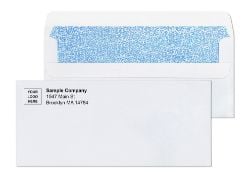
Seal type does not affect the envelope size or postage class, but it affects workflow, especially in high-volume mailing programs.
- Moisture-seal (gummed flap): The traditional style. You moisten the gum strip with water or a wet sponge. Reliable and cost-effective for moderate volumes. The dried gum remains inactive until moistened, so the envelope can be stored flat.
- Self-seal (peel-and-stick): A peel-and-stick strip covers the adhesive. Remove the liner, fold the flap, and press. No moisture required. Better for high-volume operations, offices without envelope moisteners, and any program where speed matters.
For window envelope programs with automated insertion equipment, check that the seal type and flap weight are compatible with your folder-inserter. Most commercial folder-inserters handle standard commercial flap weights on both moisture-seal and self-seal envelopes.
Useful Resources for Envelope Size, Postage, and Mailing Standards
The following resources are useful for confirming current USPS postage requirements, international envelope standards, and size specifications:
- USPS Business Mail 101: Letters: official USPS size requirements for letter-rate mail
- USPS Business Mail 101: Flats: official USPS size requirements for flat-rate mail (9x12 and larger)
- USPS Postage Price Calculator: calculate exact current postage by weight and class before mailing
- ISO C-Series Envelope Sizes (PaperSizes.org): international envelope size reference for C4, C5, C6, and DL
Not Sure Which Envelope You Need? Use This Quick Decision Guide
| Your Situation | Use This Envelope |
|---|---|
| Mailing a business letter, invoice, or cover letter tri-folded | #10 |
| Mailing a billing statement where the address shows through a window | #10 Window (with Z-fold) |
| Mailing a statement where both addresses show through windows | Double Window #10 |
| Mailing a half-folded flyer, brochure, or newsletter | 6x9 Booklet |
| Mailing a resume, contract, certificate, or unfolded document | 9x12 |
| Mailing a thick multi-page packet or presentation folder | 10x13 |
| Mailing legal-size 8.5x14 paper tri-folded at letter rate | #14 (5 x 11.5 in) |
| Mailing more than 3 sheets tri-folded at letter rate | #11 |
What Customers Say
The following reviews are verified customer reviews pulled directly from product pages on BusinessEnvelopes.com.
★★★★★
"Flip and stick with no annoying strip to peel makes this the only choice."
★★★★★
"These are great -- no complaints at all. They print great and the seal is very secure."
★★★★★
"I use these for both mailing and filing. They hold a lot of paperwork and are great quality."
★★★★★
"As always, our order was delivered quickly and printed perfectly! Thank you for the wonderful customer service!"