

Quick answer: A window envelope has a transparent poly-film panel that shows the recipient's address from the document inside, eliminating the addressing step. A regular envelope has no opening , you address it separately. Neither is universally better. Window envelopes belong in billing, payroll, and any program where your software prints the address consistently. Regular envelopes belong in personalized correspondence, direct mail with exterior design, and any mailing where document content varies or maximum privacy is needed. Most operations use both.
The window envelope vs regular envelope decision comes up whenever a business sets up a new mailing program, switches accounting software, or notices that manual addressing is eating too much time. The choice is not complicated once you understand what each format actually does. This guide explains the mechanical difference, lays out a program-by-program decision matrix, and covers the factors most envelope guides skip: insert shift risk, automation compatibility, privacy, and custom printing.
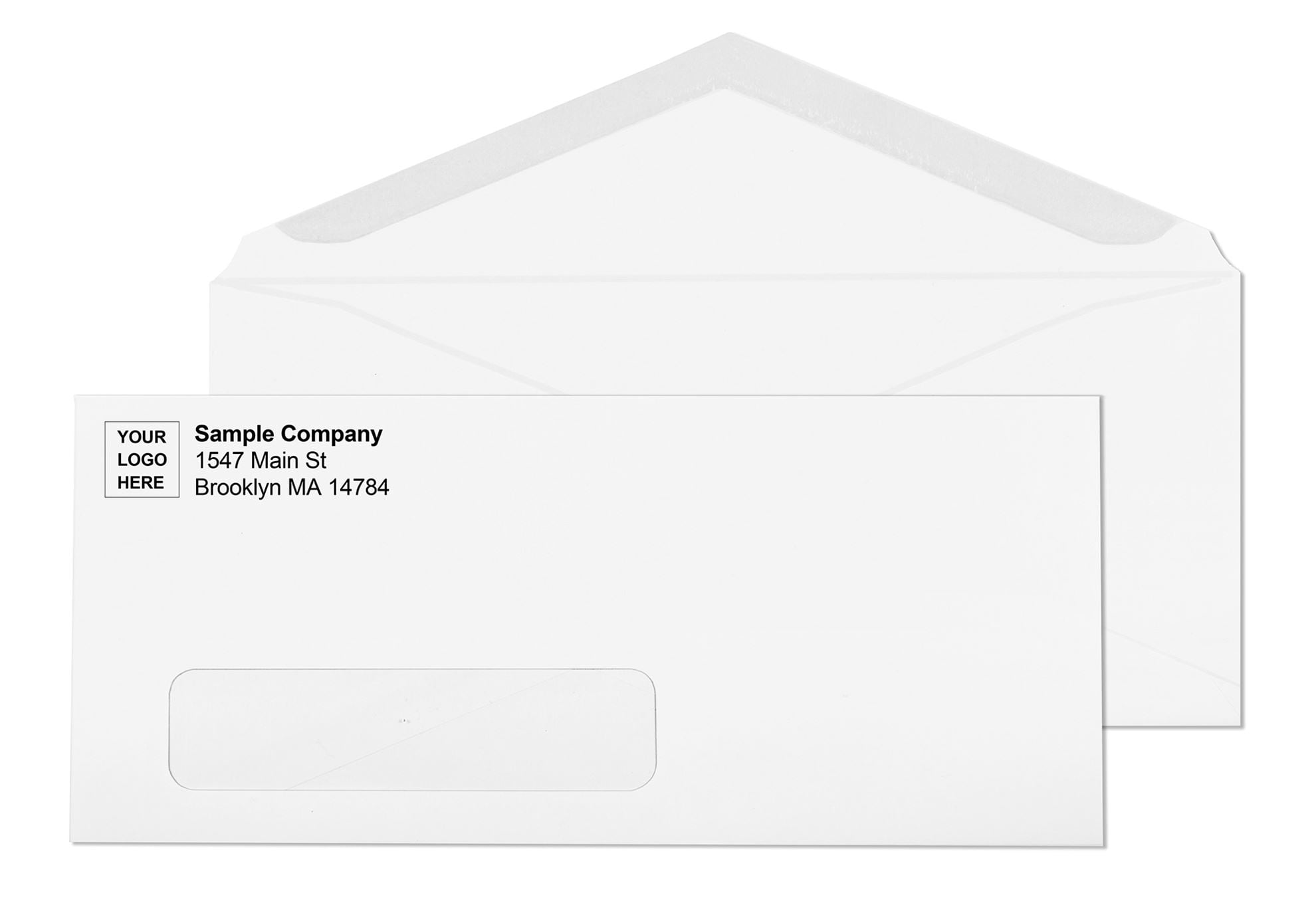
What Is a Window Envelope and What Is a Regular Envelope?
Window envelope
A window envelope has a die-cut rectangular opening on the front face, covered with a thin transparent film , typically polypropylene or glassine. The document inserted inside is folded so that the recipient's address block sits directly behind that film opening. When the envelope is sealed and held face-forward, the address on the document shows through the window as the mailing address. The envelope itself is never addressed.
This design eliminates one entire production step. For any program running invoices, billing statements, payroll checks, or form letters at volume, that single elimination adds up to significant time savings across every mailing cycle. Browse the full range at window envelopes.
Regular envelope
A regular envelope , also called a plain envelope or non-window envelope , has no opening on the front face. The entire front panel is solid paper. The recipient's address is applied separately: printed directly on the envelope, applied as a label, or written by hand. The document inside can be positioned however the program requires because there is no window zone to align with.
Regular envelopes give the sender complete control over the exterior presentation. The full front face is available for custom printing, design elements, teaser copy, or branding. For direct mail programs, personalized correspondence, and any mailing where the envelope itself carries part of the message, regular envelopes are the correct format. Browse options at regular envelopes.
The Core Mechanical Difference: One Step vs Two Steps
The practical difference between window and regular envelopes comes down to addressing. With a regular envelope, addressing is a separate step that must happen correctly for every single piece. With a window envelope, addressing happens automatically because the address on the document inside is the mailing address.
| Factor | Window Envelope | Regular Envelope |
|---|---|---|
| Addressing method | Address on document shows through window , no separate step | Address applied to envelope face (print, label, or handwrite) |
| Document template requirement | Address block must be in fixed position on every document | No position constraint , document can use full page |
| Addressing errors | Eliminated , address and document match automatically | Possible , wrong envelope matched to wrong letter |
| Variable-format compatibility | Risky , page count variation can shift address position | Safe , format variation does not affect exterior |
| Front face design flexibility | Partial , logo and return address printable; window zone excluded | Full , entire front face available for design and copy |
| Privacy | Good with security tinting , window shows only address zone | Maximum , no window exposure; full interior privacy |
| Mailing machine (inserter) compatibility | Yes , gum flap formats run through inserters correctly | Yes , gum flap formats run through inserters correctly |
| Cost per unit | Slightly higher due to die-cut window and poly film | Slightly lower on equivalent spec |
| Best for | Billing, invoicing, payroll, healthcare, high-volume template programs | Personalized mail, direct mail, individual correspondence, variable content |
Window Envelope vs Regular Envelope: Decision Matrix by Program Type
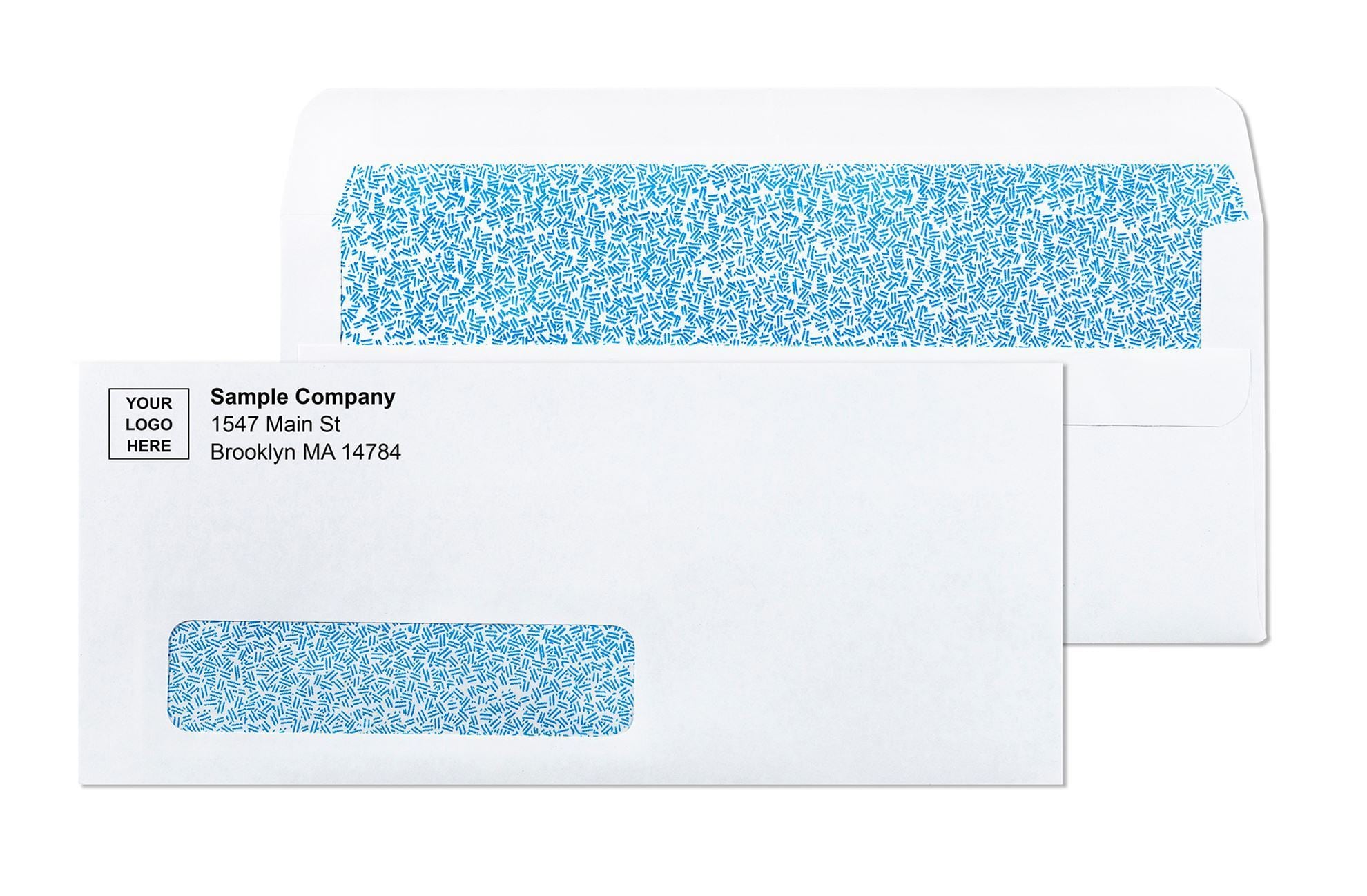
The clearest way to make the window vs regular decision is to match the envelope format to the mailing program, not to a general preference. Here is how the choice breaks down across the most common US business mailing programs.
| Mailing Program | Use Window? | Format | Why |
|---|---|---|---|
| Monthly invoices and billing statements | Yes | Single window #10 | Address already on statement; window eliminates per-piece addressing |
| Payroll checks (QuickBooks, ADP, Sage) | Yes | Double window check format | Both return and delivery addresses are on the printed check; double window handles both |
| Healthcare billing (EOBs, patient statements) | Yes | Security-tinted single window #10 | High volume + HIPAA-covered data; security tinting protects PHI during transit |
| Accounts payable and vendor payments | Yes | Single or double window #10 | Standardized vendor payment format; window eliminates label step |
| Mail merge form letters (fixed template) | Yes | Single window #10 | Mail merge consistently positions address; window automates delivery addressing |
| Personalized donor appeals and fundraising | No | Plain #10 or colored wove | Personal feel drives response; outer envelope should not look like a bill |
| Direct mail acquisition campaigns | No | Plain, colored, or starburst | Full exterior design required for teaser copy, branding, and response lift |
| Invitations, announcements, and event mail | No | A-style or announcement format | Presentation and handwritten feel; window breaks the experience |
| Variable-format documents (different page counts) | No | Regular #10 or appropriate size | Page count variation causes insert shift; address position becomes unreliable |
| Confidential HR and legal correspondence | No | Security-tinted plain #10 | Maximum interior privacy; no window exposure even with security tinting |
| Insurance premium notices and policy correspondence | Either | Security-tinted window or plain | High-volume template programs suit window; individual agent correspondence suits plain |
| Utility billing and subscription renewal notices | Yes if template-based | Window #10 | Fixed template with consistent address position; window is the standard for this use case |
The Insert Shift Problem: Why Variable-Format Mailings Need Regular Envelopes
Insert shift is the most common failure mode in window envelope programs and the main reason variable-format documents belong in regular envelopes.
When a billing statement is always one page, the fold is always in the same place and the address lands in the window reliably. When a document varies , sometimes one page, sometimes two, sometimes with a return slip , the fold position shifts with the page count. On a two-page document, the address may land half an inch lower than on a one-page document. A half-inch shift is enough to push the address out of the window zone, producing a sealed envelope with a blank face that USPS cannot deliver.
The fix is not complicated but it requires a decision before ordering. If your document content is fixed and consistent, a window envelope is the right choice. If document content varies regularly, order regular envelopes and address them separately. Mixing variable documents with a window envelope program creates returns, delays, and sorting problems that accumulate across every mailing cycle.
For the full technical explanation of alignment and how to set up a window program correctly, see Window Envelope Address Alignment: How to Fix It for Any Software or Printer.
Privacy and Security Tinting: How Window and Regular Envelopes Differ
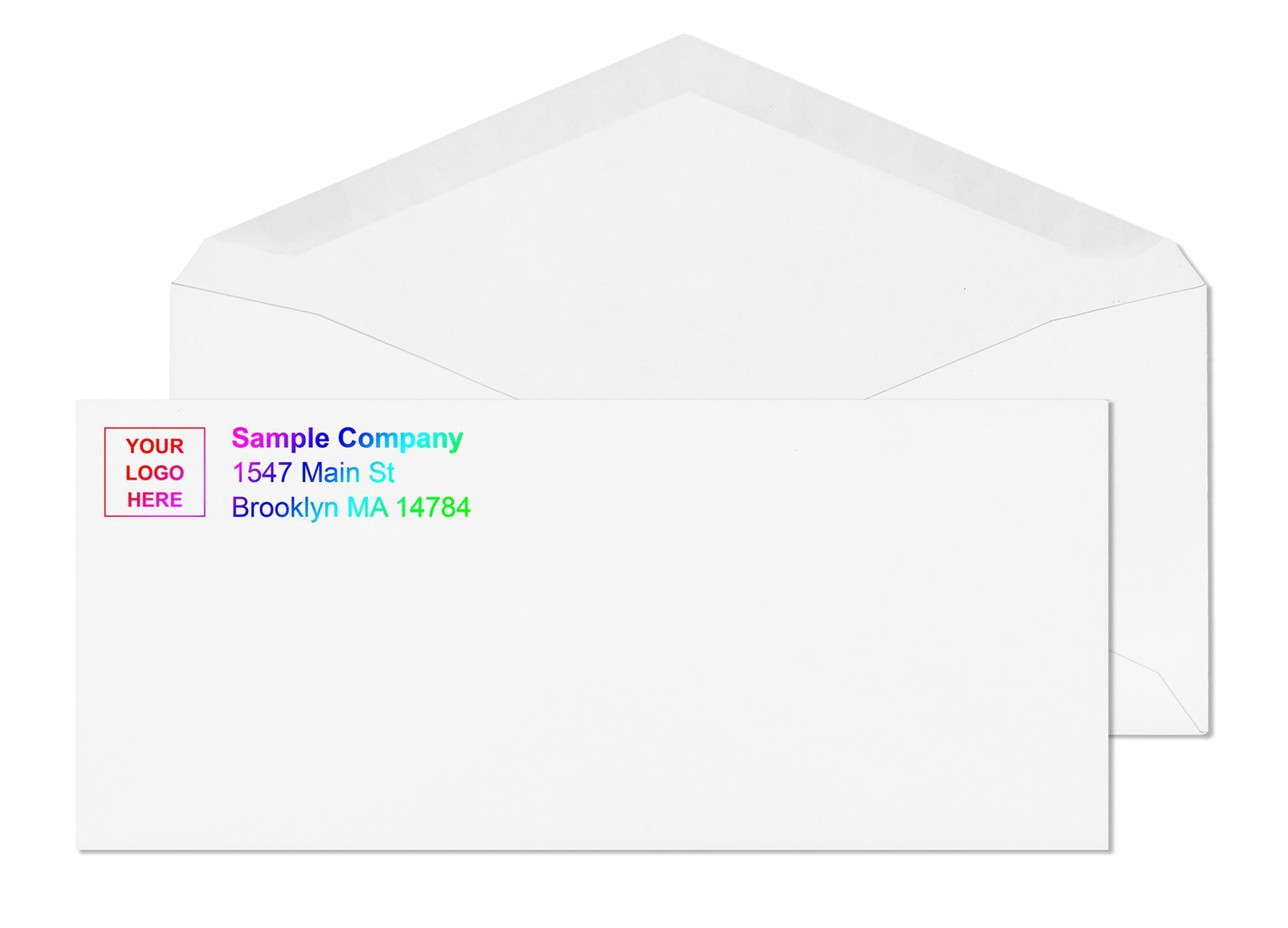
Both window and regular envelopes are available with security tinting, but the privacy question works differently for each format.
Regular envelopes and privacy
A regular envelope with security tinting provides maximum interior protection. The tinted crosshatch pattern blocks all document contents from being visible through the envelope paper under any light source. Because there is no window opening, nothing on the document is ever exposed to the exterior. For payroll documents, legal correspondence, and any program where even the address zone is sensitive, a security-tinted regular envelope is the correct specification.
Window envelopes and privacy
A window envelope with security tinting protects all interior content except what is in the window zone. The tinted pattern covers the full envelope body, including the area immediately around the window opening. Only the document content that sits directly behind the transparent film is visible from outside. If the document template is set up correctly, that visible content is only the six-line address block.
The risk comes when document content near the address block drifts into the window zone: account numbers, balances, diagnosis codes, or patient identifiers that appear just above or below the address. Security-tinted window envelopes reduce this risk by covering the surrounding area, but template design and consistent fold depth are the primary controls. For the full explanation, see Security Tinted Envelopes: What the Interior Pattern Actually Does and When You Need It.
Automation Compatibility: Inserter Machines and Both Formats
Window and regular envelopes have identical automation compatibility requirements , the difference is the closure type, not the format.
Standard commercial folder inserter machines are designed for gum flap envelopes. The inserter's sealing unit applies moisture to activate the gum adhesive as each envelope passes through. This works whether the envelope is a window or a plain regular format. Self-seal closures , peel-and-seal and flip-and-stick , cannot be processed by standard inserter sealing units.
| Closure Type | Inserter Machine | Hand Sealing | Available on Window? | Available on Regular? |
|---|---|---|---|---|
| Gum flap | Yes | Yes (moistener required) | Yes | Yes |
| Peel-and-seal | No | Yes | Yes | Yes |
| Flip-and-stick | No | Yes | Yes | Yes |
If your operation runs a folder inserter, order gum flap , regardless of whether you choose window or regular envelopes. If you seal by hand, either self-seal closure works correctly for both formats. For the complete guide to inserter compatibility, see Envelopes for Automated Mailing Systems: Which Formats, Sizes, and Closures Work.
Custom Printing: Window vs Regular Envelope Differences
Both window and regular envelopes support custom printing of your logo, return address, and brand elements. The practical difference is where you can print and how each format handles the exterior design.
Custom printing on window envelopes
The window panel area cannot be printed on. Printing on the front face of a window envelope is limited to the zones outside the window opening , typically the upper-left return address area and the upper-right postage area. For billing, healthcare, and financial programs, custom-printed window envelopes with a logo and return address in the upper left are the professional standard. The window handles the delivery address automatically.
Custom printing on regular envelopes
The full front face is available. Regular envelopes support full-face printing including teaser copy, promotional messaging, graphics, and design elements that span the entire envelope face. For direct mail programs where the outer envelope is part of the marketing message, regular envelopes provide design freedom that window envelopes cannot match. For the full range of custom printing options, see Custom Printed Envelopes: Logo, Return Address and Design Guide.
Double Window Envelopes: When You Need Two Visible Zones
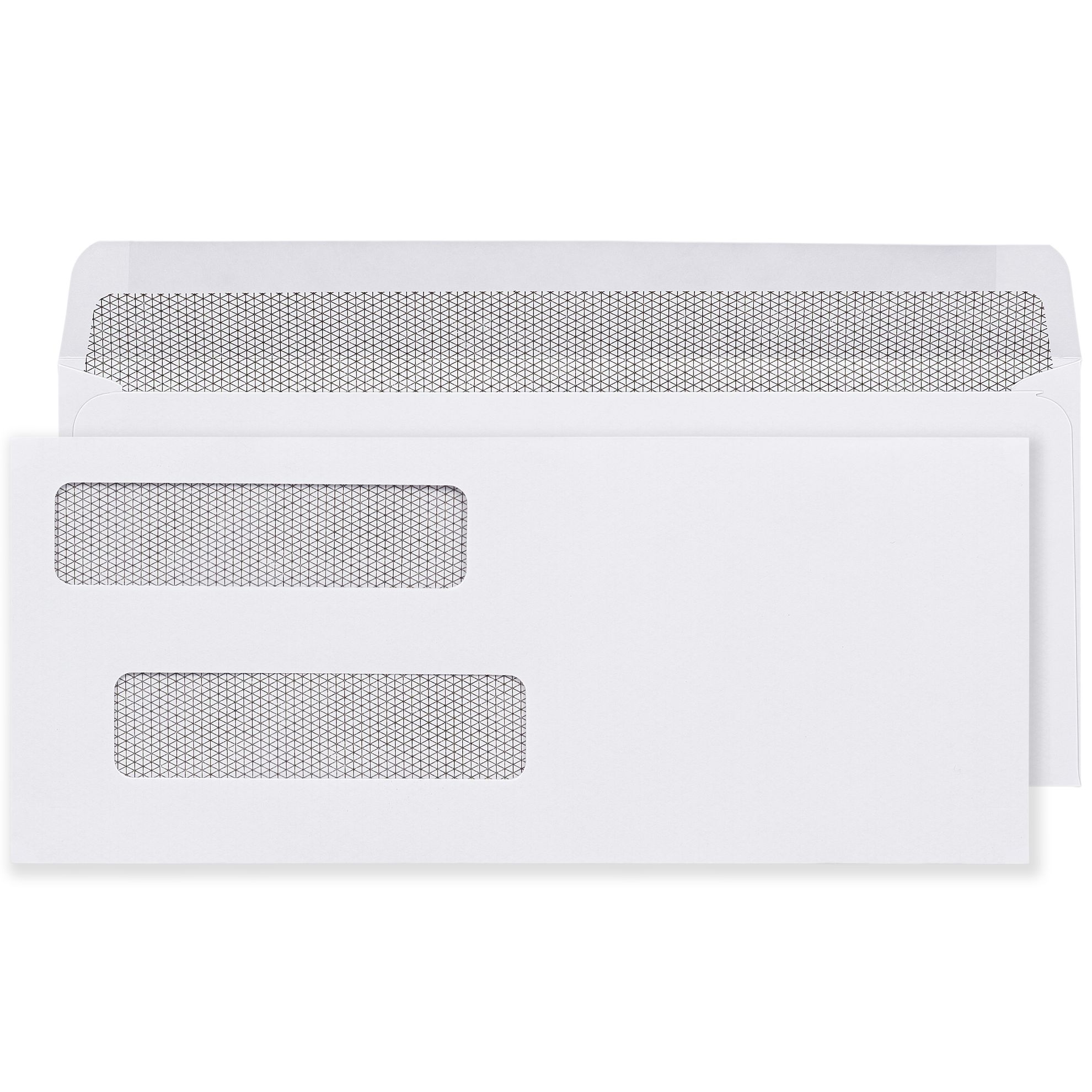
A double window envelope takes the window concept one step further by cutting two openings: one for the delivery address and one for the return address. Both addresses on the printed document show through simultaneously. No address appears anywhere on the envelope itself.
This format is the standard for payroll check programs running through QuickBooks, ADP, Sage, and similar accounting platforms. The check format positions the recipient payee address and the company return address in the precise locations where the two windows sit. Folding the check correctly and inserting it face-forward completes the mailing , no addressing, no labels, no manual steps.
Double window envelopes come in check-specific and invoice-specific configurations, and the window positions are not interchangeable. See double window envelopes for the full range and program-type selection guide.
How to Fold a Letter for a Window Envelope
When using a window envelope, the fold direction determines whether the address shows correctly. The correct fold for a single window #10 envelope is the Z-fold, not the standard C-fold.
- C-fold (standard letter fold): All three panels fold in the same direction. The address block faces inward and is invisible through the window.
- Z-fold (window envelope fold): The second fold reverses direction, forming a Z shape. The address block faces outward and sits directly behind the window film.
Getting the fold direction wrong is the single most common cause of window alignment failures in new programs. Run a 10-piece test before any batch run: fold, insert, and confirm the full address is visible through the window with at least 1/8-inch clearance on all four sides. For the full folding guide, see How to Fold a Letter for an Envelope: Tri-Fold, Half-Fold, and Window Alignment Explained.
What Customers Say About Business Envelopes Window and Regular Envelopes
★★★★★ Shaindy, Verified Buyer | #10 Window White Wove Printed Envelopes
"Super quality! Great product."
★★★★★ Claire, Verified Buyer | #10 Window White Wove Printed Envelopes
"My envelopes arrived perfect as always. Thank you again!"
★★★★★ Gitty, Verified Buyer | #10 White Wove Printed Envelopes
"Great quality basic envelopes at great price! Thank you!"
★★★★★ Jacob, Verified Buyer | #10 White Wove Printed Envelopes
"I am very pleased with these envelopes and will order again! Great product and shipped very well! Better than I get from local office supply and a better value!"
Why Business Envelopes for Window and Regular Envelopes
Business Envelopes has supplied window and regular envelopes to US businesses, billing departments, healthcare facilities, law firms, and nonprofits since 1997. The full #10 lineup covers every combination of format, closure, and security specification: plain window, security-tinted window, double window, and the matching plain and tinted regular formats , all available blank or with custom logo and return address printing.
- No minimum order on any format
- Same or next business day shipping on blank stock
- Custom printing with PDF proof before production
- Artwork stored on file for automatic reorders
- Free ground shipping on every order
For volume programs and wholesale ordering across both formats, see Mailing and Sending Letters: The Complete US Business Guide.